
By Paul Takisaki
NAP Contributor
My great-grandfather, Tamotsu Takisaki, arrived in Seattle in 1907 aboard a Nippon Yusen Line ship. He was 24 years old and fluent in English which was unusual for a Japanese man of his era. According to family oral history preserved by his son Raymond’s interview, Takisaki had dreamed of attending Cambridge University in England but lost all his money gambling on the ship. Stranded in Seattle, Washington with nothing, his English fluency became his greatest survival asset.
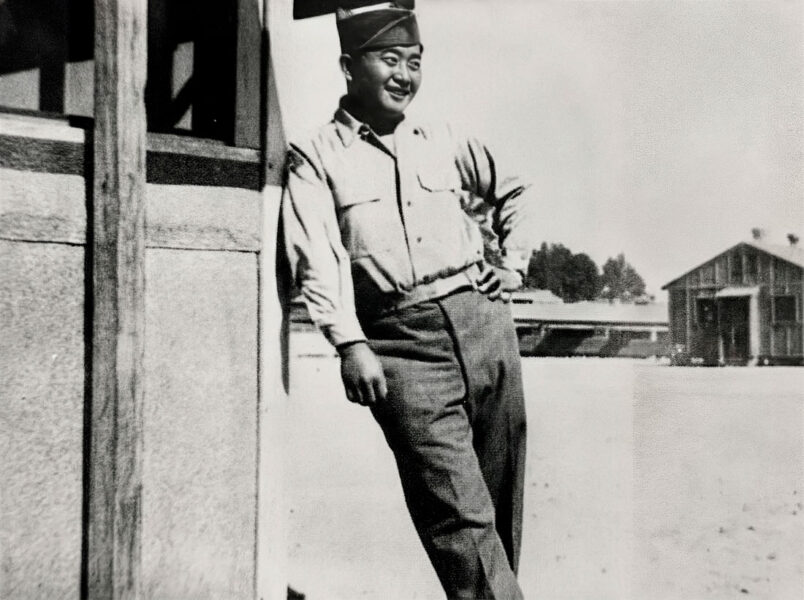
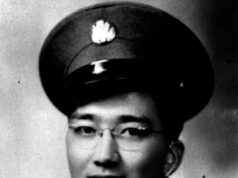
Raymond Takisaki in the U.S. Army 442nd Regimental Combat Team, 1945. Photo courtesy: Paul Takisaki.
Takisaki worked as a foreman for railroad and logging crews. Eventually, he established a strawberry farm in Bellevue, Washington and later operated Garden Grocery on Capitol Hill in Seattle. Takisaki became a respected figure in Seattle’s martial arts community, holding the rank of 5-dan (system of ranks) in kendo and serving as chief instructor at the Seattle Kendo Kai. Fellow practitioners described his style as “grand, stately, immovable.” Most students simply called him “Sensei” (teacher).
It was Takisaki’s prominence that made him a target. On January 21, 1942, six weeks after Pearl Harbor was bombed in Hawaii, three U.S. Federal Bureau of Investigation (FBI) agents walked into Garden Grocery and arrested Takisaki. His son Raymond, age 17 at the time, watched as they searched the house. Takisaki was sent to Fort Lincoln Incarceration Camp in Bismarck, North Dakota. His children were scattered across three states. Some went to the Minidoka Incarceration Camp located in the middle of Idaho. Raymond Takisaki relocated to Spokane, Washington to stay with the Clausen family, Caucasian friends who risked social ostracism to shelter him.
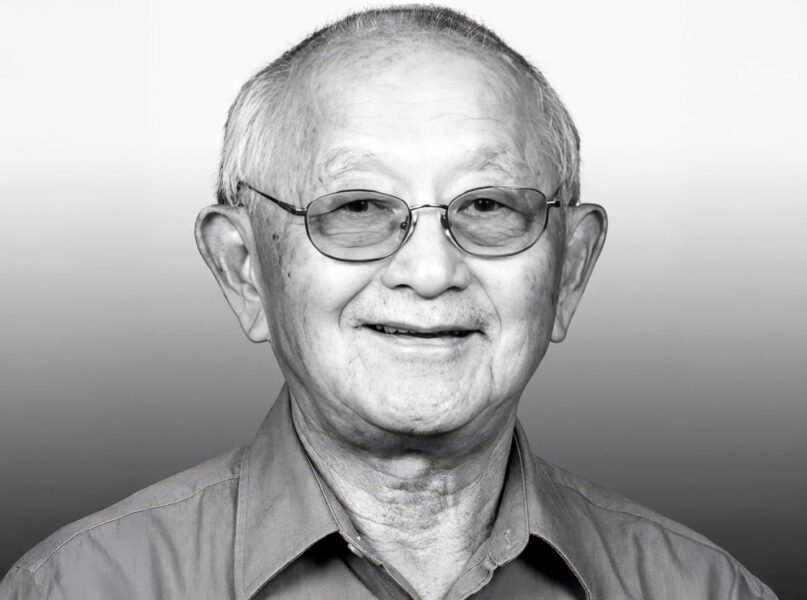
Portrait of Raymond Takisaki. Unknown date. Photo courtesy: Paul Takisaki.
A declassified FBI interrogation transcript, uncovered through research, revealed how Tamotsu Takisaki navigated his questioning. When asked about the kendo club’s rituals, he told agents his club “did not go through any ritual such as bowing to the shrine of a Japanese god because he does not believe this should be done in the United States.” It was the careful answer of a man demonstrating his loyalty while the U.S. government held him away from his family.
Before his arrest, Tamotsu Takisaki told his sons Raymond and James to enlist in the U.S. military. “This is your country,” he said. “Papa won’t go to war against Japan but you and your brother have to go to war for this country.” Raymond Takisaki did. He was drafted, went to Fort Douglas, Utah then to Camp Shelby, Mississippi with the U.S. Army 171st Replacement Battalion. Later, he joined the 442nd Regimental Combat Team in 1945 fighting for a country that had his father behind barbed wire.
For decades, these stories lived only in family conversations. Raymond Takisaki recorded an oral history interview in 2006. It is from his words that many of the family’s details have been preserved. However, I, as a 42-year-old Yonsei (fourth generation Japanese American) living in the Pacific Northwest recognized something urgent. The Nisei (second generation Japanese Americans) are nearly gone and the Sansei (third generation Japanese Americans)are aging. Once they pass away, the stories will go away with them. Every Japanese American family has stories like this. The problem is that most of them have never been recorded. My grandfather’s interview saved everything for our family but how many families do not have that?
My grandfather passed away before I could capture more of his story. I salvaged some audio clips from an old video interview and I am currently piecing the narrative together, I kept returning to my grandfather’s interview, listening to stories I had never heard before — details that unlocked over a century of family history. What if every family could have that?
That is why I built Heritage Whisper. It is where people use their voice, guided by an Artificial Intelligence interviewer that helps them recall rich details and uncover memories. Families, anywhere in the world, have instant access to the audio, transcriptions, and photos.
Our elders will not be here forever. One conversation saved everything for our family. Listen and see Raymond and Louise Takisaki in their own voices at: heritagewhisper.com/examples. For more information, see: https://heritagewhisper.com.