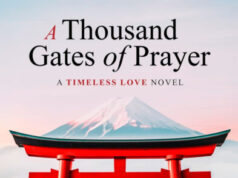
By Pamela Okano
NAP Contributor
 Imagine not being able to have your children jump on you! Imagine being bedridden at the age of 38! This is what happened to Dr. Takashi Nagai.
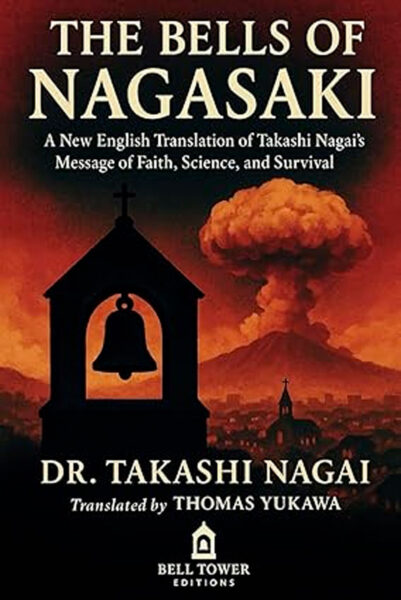
How did this happen? Even before the plutonium atomic bomb was dropped on Nagasaki on August 9, 1945, Nagai was heavily involved in radiation research. Back then, the appropriate measures for protecting oneself from radiation were known. Sadly, they were not often used.
In June 1945, Nagai was diagnosed with leukemia and given only three years to live. This was due to radiation exposure during radiological examinations as film was not yet available. By this time, his spleen had enlarged so much that his children could no longer jump on him for fear that the spleen would burst. Yet, he continued working.
When the atomic bomb was dropped, Nagai’s wife, Midori, was killed instantly. He lost all his children except for son Makoto and daughter Kayano. Nagai had converted to Catholicism in 1934 and was deeply religious. Despite suffering a head injury, not to mention radiation exposure, Nagai kept working, rescuing people from burning buildings and treating their wounds as best he could. By August 11, he collapsed and was in bed for a month.
On October 15, Nagai returned to the Urakami District of Nagasaki and built a small hut (six tatami mats) for his two children, his mother-in-law, his younger brother and his wife, and himself. He also continued teaching.
Nagai mourned his wife for six months, letting his beard and hair grow. In November, a Catholic mass was held in front of the ruins of the Urakami Cathedral. Nagai gave a speech filled with faith, suggesting the bomb victims were a sacrifice to obtain peace.
In July 1946, Nagai collapsed at a train station. He spent the rest of his life in bed receiving visitors, continuing to write, and continuing to receive plaudits from others. He died on May 1, 1951, at the age of 43.
In May 1947, the local Society of Saint Vincent DePaul built Nagai a two tatami-mat teahouse-type structure known as Nyoko-Dou (ask yourself) Hermitage which can still be visited today. In addition, there is a museum in Nagasaki dedicated to Nagai’s life. It is located at 22-6 Uenomachi, Nagasaki, Japan.
Nagai received the Order of the Rising Sun from the Japan Prime Minister for his work in the military and was considered by the Catholic Church as a “Servant of God”. (A beatification process for an individual whose life works are being investigated in consideration for recognition by the Pope). He devoted his life to helping the less fortunate. The Catholic Church is even considering Dr. Nagai and his wife for potential sainthood.
The book is heartbreaking because it was clear that Dr. Nagai would die, leaving his young children as orphans. I felt like an orphan when my father died many years ago but by then I was in my 40s. One can only imagine how Makoto and Kayano felt when they lost their father when he was only 43. Makoto was just 16 and Kayano was 10. In some ways, this was very similar to my own situation when we lost our mother, I was 16, and my brother was 9. It would take us years to get over her death.
This is a lovely book filled with Nagai’s faith and hope that his children would someday carry on. Indeed, after working as a journalist for 40 years, Makoto Nagai planned to return to Nagasaki to work with the poor. His daughter Kayano continued her faith and helped the poor.