By David Yamaguchi
The North American Post
Owing to films such as “Silence” (2016), the story of Japan’s past hidden Christians may be known to many readers. Forced underground to escape persecution in 1614, such families re-emerged into the sunlight 250 years later with the 19th century reopening of Japan. This surprised the West with the persistence of their faith.
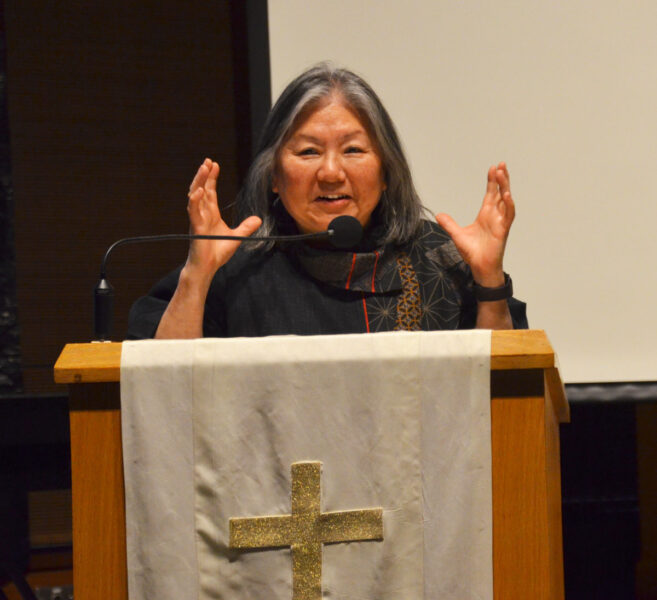
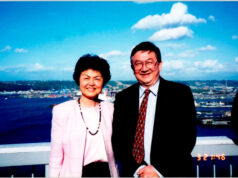
Reverend Carolyn Yabuki Shimabukuro, filmmaker. 2026. Photo credit: David Yamaguchi.
Yet tales like this tend to remain mystical until ordinary Seattle people make the journey to historical Japanese Christian sites and bring the story home. In March, Reverend Carolyn Yabuki Shimabukuro shared the documentary at the Japanese Baptist Church (JBC) in Seattle, Washington that she made with videographer Chong Ahn. It is based on two ten-day Japan pilgrimages in 2024 and 2025. The setting was fitting because JBC has long reached out to downtrodden Japanese and Japanese Americans over its lengthy history.
“A Pilgrimage, the Early Christians of Japan” (2026, 27 min.) opens with the month-long, forced march of 26 barefoot Christians from Kyoto to Nagasaki in January 1597, a 485 mile journey. They were punished for their religion and paraded through villages. Included were three boys, ages 12, 13 and 14. By February 5 all were crucified.
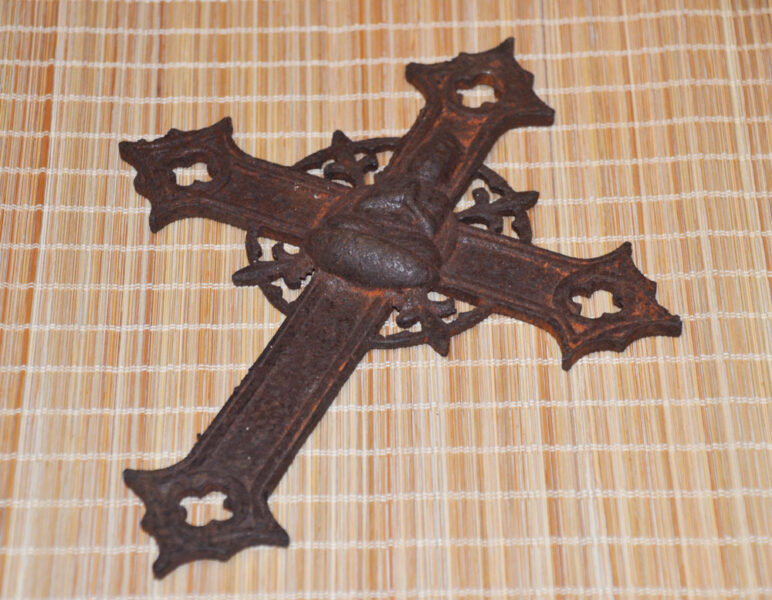
Metal cross with a Buddha in the center. Date unknown. On loan by Mutsuko Okada. Photo courtesy: David Yamaguchi.
From that stark beginning, we learn many fascinating things. Some Japanese Christians fled to tiny islands outlying Kyushu. They wanted to escape the prying eyes of Toyotomi Hideyoshi, the ruling samurai and daimyo (powerful, feudal, territorial lord). He feared Christianity owing to its power to draw the people’s allegiance.
The showing of the film was accompanied by a rare display of hidden Christian artifacts from the collection of Mutsuko Okada. She was a Nisei (second generation Japanese Americans) whose daughter Leslie Okada Roberts participated in the 2025 pilgrimage.
Shimabukuro said to Roberts, “These are such precious and important objects. They need to be shared. You cannot keep these in boxes.”
Prints from Sadao Watanabe (1913-1996), an artist who dedicated his career to biblical themes, accompanied the relics.
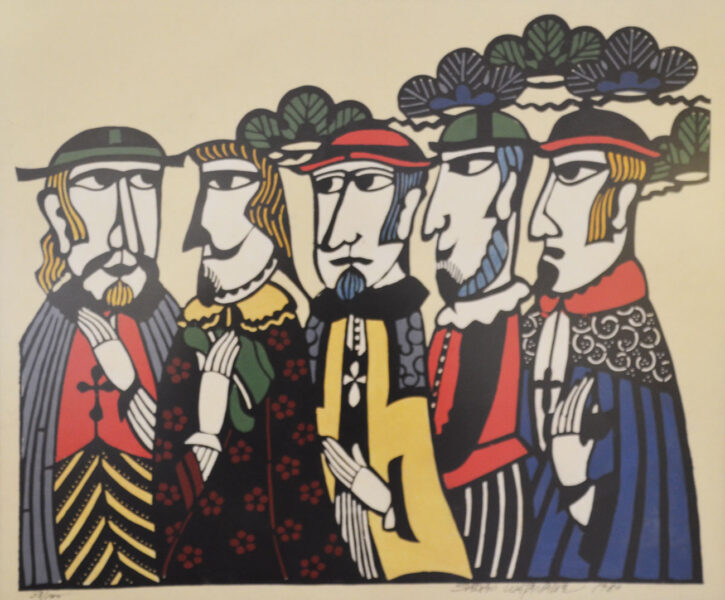
The Coming of Christianity in the Padres are Coming, 1980. By artist Sadao Watanabe. Mingei and paste-resist stencil dying. Depicts olden-day Christians in Japan and Christianity in an Okinawan folk-art style. Photo courtesy: David Yamaguchi.
Whether Christian or not, viewers will be moved by “A Pilgrimage” owing to the way it concisely outlines the history and geography of early Christianity in Japan. Christianity is one of the paths where Japan and the West have interacted over the centuries. The film clarifies events from Japanese history that we have heard of but are fuzzy such as the Battle of Sekigahara and the Shimabara Rebellion.
The documentary will be posted soon on the JBC website at: jbcseattle.org. Shimabukuro is also open to presenting the film to groups in person. She can be reached at; carolyn@allseasonscounseling.org.
The JBC website is also worth visiting to see the church’s written history which is deeply intertwined with that of the Seattle Japanese community. Established by Issei (first generation Japanese Americans) in 1891, the church sheltered new immigrants and picture brides. A cute photograph of young Nisei children in sailor suits and white dresses in tiny chairs is not to be missed. Legendary JBC pastor Emery Andrews, who aided the incarcerated community during World War II, is highlighted. Many present-day Sansei (third generation Japanese Americans) also attended its nursery school.