By Sophia Schintzel
NAP Contributor
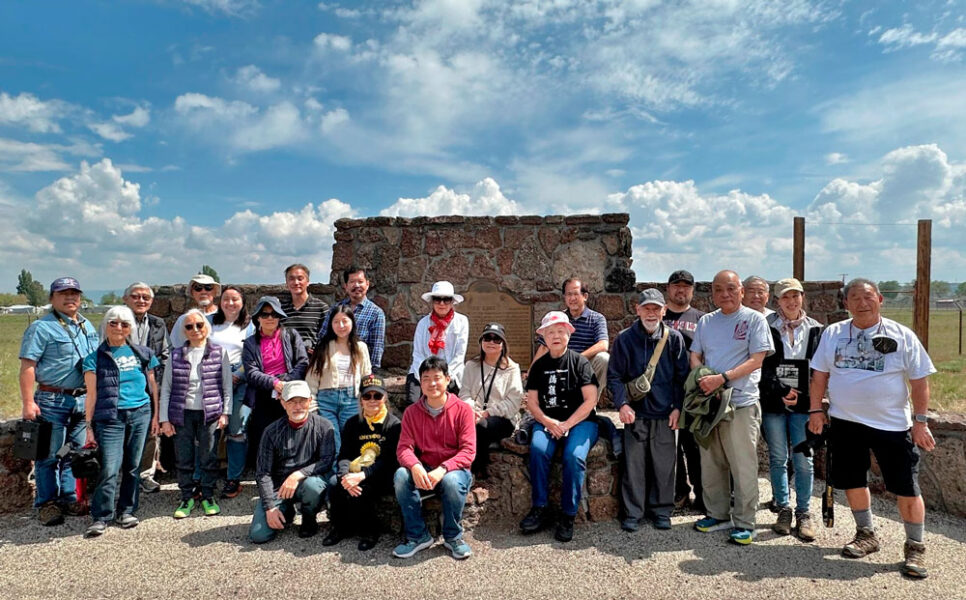
Tule Lake Committee at Tule Lake in Newell, CA. Photo credit: Tule Lake Segregation Center.
The U.S. National Trust for Historic Preservation unveiled its annual list of America’s 11 Most Endangered Historic Places. This year honors the 250th anniversary of our nation’s founding and the self-evident truth that all people are created equal. To protect these historic places and enable their stories of equality to be shared for generations, all 11 sites will receive a one-time grant of $25,000 from the National Trust.
“Even as the American people prepare to commemorate the nation’s 250th anniversary, consequential historic places are at risk—some through intentional erasure, others from short-sighted development plans, and still others from deterioration or neglect,” said Carol Quillen, President and CEO of the National Trust for Historic Preservation. “This year, we honor our Declaration of Independence and the living power of its aspirations. By highlighting at-risk sites where the fight for equality happened and by recognizing the heroes whose commitment, resilience, and moral courage can inspire us today to continue to build a more perfect union.”
Each site on this year’s list illustrates a different connection to the founding-era principle that all people are created equal. These historic places helped define or redefine the nation’s fundamental values of equal opportunity, religious freedom, self-governance and voting, immigration and citizenship, freedom of expression and assembly, and equal access to justice. Preservation of these sites is key to telling the full American story.
Over the coming year, each of the 11 sites will use the visibility created by this announcement as a catalyst for their own locally driven efforts to raise critical funding, rally public support, advocate for change, and permanently save these historic places. Grant awards from the National Trust will help kickstart this urgent work, supporting preservation-based planning and brick-and-mortar stabilization. Exact plans vary from site to site, but commonly include activities such as building and site repairs, the creation of new interpretive materials, and educational community events.
Since its debut in 1988, the list of America’s 11 Most Endangered Historic Places has galvanized support for more than 350 sites located across the country. The annual program has proven to be a highly effective tool for local advocates to raise national awareness and to highlight the threats facing some of the country’s most significant historic places. Through preservation, revitalization, investment, land protection, and activation, these places continue to share their stories, educate the public, and engage communities across the nation.
To learn more about the places on this year’s list and find out what you can do to help preserve and activate them, go to: www.SavingPlaces.org/11Most.
Two of the 2026 America’s 11 Most Endangered Historic Places are:
Tule Lake Segregation Center (Modoc County, California)
The Tule Lake Segregation Center is a place which honors the brave contributions of Japanese Americans who fought to protect the rights of American citizenship. Once serving as a maximum-security prison for Japanese Americans who protested their unjust, race-based incarceration and deportation, the site is now a National Monument that is sacred to the survivors and descendants of those imprisoned there. Only a token 37 acres of the 1,100-acre site is protected with the major portion at risk of permanent alteration from a proposed airfield fence construction project. Advocacy efforts are needed to ensure Tule Lake can be protected. Its stories of resistance and resilience shared with future generations on this sacred site is where thousands of immigrants and American citizens bravely advocated for their rights.
Angel Island Immigration Station (Tiburon, California)
Angel Island Immigration Station was once the busiest immigration port on the West Coast. Many of those who passed through its doors, particularly immigrants from Asia and the Pacific seeking access to America’s promises of freedom, were instead subjected to unjust, race-based, mistreatment including detention, interrogation, and family separation. Today, Angel Island is endangered by physical, environmental, political, and economic factors. While several buildings have been restored and opened to the public, additional funding is needed for structural repairs, expanded programming, and increased awareness of this site and its significance to the nation.