
Seattle Kumamoto Kenjinkai
Everyone Is Welcome: Building a Community for the Next 100 Years
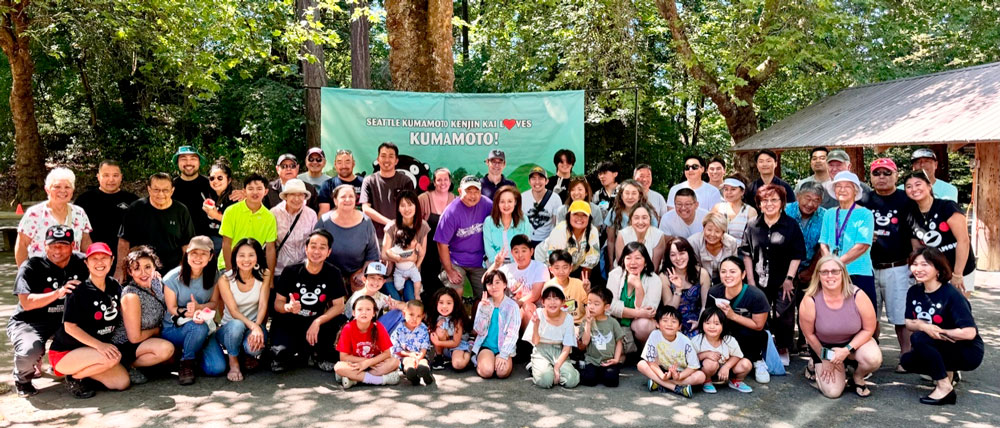
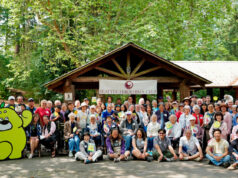
Seattle Kumamoto Kenjin Kai members and guests gather for the summer picnic bringing children, adults, and multiple generations together.
Founded in 1907, the Seattle Kumamoto Kenjin Kai has nearly 120 years of history and about 150 members today. Its community includes people from Kumamoto as well as members from other prefectures and anyone with an interest in Japanese culture.
A major turning point came 13 years ago, when Calvin Terada was elected president of the Board of Directors. At the time, the organization was shrinking as many longtime leaders grew older and its future was uncertain. Encouraged by the former president to choose the path he believed was best, Terada set out to build an organization that could thrive for another 100 years. Leadership became more member-driven, with an environment that made it easier for board members to share ideas. The group also opened its doors more widely: membership would no longer be defined only by birthplace but by a desire to connect with others and an appreciation for Japan.
To welcome younger families, the club has partnered with Megumi Preschool, giving children an opportunity to sing at the New Year’s gathering. It also began collaborating with other kenjinkai and with the U.S.-Japan Council, adding a cultural dimension to a network often centered on academic and business connections. New first-generation Japanese immigrant families have joined as well, helping to broaden the club’s membership across age groups.
Its three major annual events have evolved with the community. At the summer picnic, the former bring-your-own-bento format has become a potluck with activities such as ball tosses and water-balloon relays that children and adults can enjoy together. The fall bus tour has shifted from adult-oriented casino trips to family-friendly destinations and experiences including Northwest Trek, Olympic Music Festival, Manhattan Project National Historical Park, and the Japanese American Museum of Oregon. This year’s program includes a joint visit to Bainbridge Island with the Seattle Hiroshima Club. Bainbridge was the first place where families affected by Executive Order 9066 were forcibly removed during World War II. Trips like these allow multiple generations to spend time together while learning Japanese American history. It gives children, growing up in Seattle, opportunities to develop a stronger sense of Japanese American identity.
For Terada, the purpose of kenjinkai is to honor the risks earlier generations took in immigrating to the United States, and to pass the lives and relationships they built on to the future with pride. “Everyone needs a place to belong,” he said. “That is why carrying the torch to the next generation is at the heart of what we do.” A fourth-generation Japanese American with a first-generation mother, Terada also found in the club a place to strengthen his own identity through cultural activities. By working with other Japanese American organizations and continuing to change with the times, the Seattle Kumamoto Kenjin Kai hopes to remain a warm place where people can experience Japanese culture, meet others, and build community for the next 100 years.
 Annual dues: $20 individual / $40 household
Contact: calterada@comcast.net | 206-601-2079
Website: kumamotokenjinkai.org
Facebook: Seattle Kumamoto Kenjin Kai
The club is accepting donations for relief following the 2026 Kumamoto earthquake. For donation information, contact Tina Terada at tina@nwrealtyconnection.com.