The Eagles of Heart Mountain
By Pamela Okano
NAP Contributor
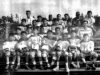
 The Eagles of Heart Mountain book tells the story of a Nisei (second generation Japanese American) football team at the Heart Mountain War Relocation Center in Wyoming. Led by Tamotsu “Babe” Nomura, the football team, despite consisting of boys who had hardly played football in their lives, did well. They were undefeated once.
The first half of the book sets the stage for the Japanese American incarceration during World War II, 1939-1945. The second half discusses the football team and the anti-draft resistance that occurred at Heart Mountain.
I felt the first half of the book was better than the second. The author does a good job of explaining the racism of U.S. General John DeWitt and Karl Bendetson, who sadly forsook his Lithuanian Jewish heritage by changing his name to Bendetsen. In addition, the first half discusses Milton Eisenhower (a younger brother of U.S. President Eisenhower), who set up the War Relocation Authority, which ran the camps. Mr. Eisenhower hated his job and would later write, “The evacuation of the Japanese-Americans need not have happened.”
The first half also tells the story of some of the boys who would later oversee the Eagles football team in camp — George “Horse” Yoshinaga and Babe Nomura (who played baseball, softball, football and was a decathlete in middle school).
The second half of the book also makes clear that although by May 1944, the U.S. Army no longer believed that there was a military necessity to incarcerate the Japanese Americans. U.S. President Franklin D. Roosevelt, nevertheless, decided to keep them incarcerated until after his fourth election. That said, the book’s second half mainly concentrates on the football team’s exploits, although without the magical touch that I typically associate with top-rate sports writing.I wanted to be inspired by this book, but sadly, that did not happen. The author, although he has sterling qualifications, did not appear to be capable of making the book inspiring. Nevertheless, it was a good read. The book does a workman-like job of telling the story of the football team and the draft resisters who ended up in prison. This book can be a good addition to your bookshelf on Japanese American history, especially if you are a sports fan. It is available at the Seattle Public Library, Barnes & Noble, Amazon, Phinney Books in Seattle, Target and at the Japanese American National Museum in California.