
Binging Shogun: Can Historical Fiction Be Good for History?
By Barbara Mizoguchi
NAP Editor
 Some may recall the FX for Hulu (American video streaming service) program “Shogun” that was released last year. It was a commercial success, and academic historians knew it would make an impact on Japanese history and culture for years to come. However, it is interesting to learn how much of the fictional film compares with actual history. To discuss it further, the non-profit organization Washin Kai is presenting David Spafford, Associate Professor of Pre-Modern Japanese History at the University of Pennsylvania. He will be speaking at Town Hall Seattle on December 8th at 6:00 p.m.
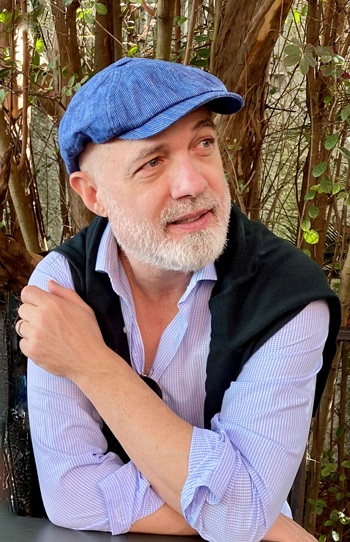
David Spafford. Photo courtesy: Washin Kai.
Some may remember James Clavell’s 1975 novel called Shogun. Later, it was re-written into a mini series in 1980 for NBC (American television network.) It was about an English seaman marooned in Japan in the 1600s and rose to a high rank of the shōgun. Although it is a fictional story, it follows the seaman’s experiences in the early 17th century of feudal Japan. It was a great television series about Japan. The series even received three Emmy awards, three Golden Globe awards, and a Peabody award. It was the highest-rated mini series at the time.
Forty-five years later, the novel was re-worked by FX on Hulu. Spafford says there was more Japanese involvement in this film, making it more accurate, but that accuracy should be thought of in shades of grey. First, we must remember this is based on a novel which is fictional. Pop culture tends to dramatize heroism. Even “bushido” or the “way of the warrior” did not actually exist during that time. It was more of a popular use of the word after the abolition of the samurai and the rise of Japan’s new nation state. Before the 1600s, the samurai were a “militarized gentry that lorded over the peasantry. Far less glamorous,” says Spafford. The most complicated and debated issues about medieval Japanese history are about land ownership. The samurai controlled much of the land locally but there was still unrest and violence including natural disasters and disease. Warriors were later required to live near their lord’s castle town which created forceful urbanization. Even those in poverty came to the cities for a better life. These castles became the kernels of early modern cities. According to Spafford, 15-16th century Japan was messy, vibrant, and awful; the complexity is what is intriguing.
Interestingly, Spafford’s parents, both Americans, met in Rome, Italy. Thus, Spafford was born and raised in Rome. He then earned his bachelor’s degree in Oriental Languages and Literature at the University of Rome. Spafford was always curious about America but did not live there until he attended the University of California, Berkeley, where he earned his master’s degree and Ph.D. in History. His first job was as an Assistant Professor in the University of Washington History Department for four years. His unusual life path has made him curious about other foreign cultures and inclined to think comparatively.
He has written several books and articles, spoke on a podcast, and was featured in “Age of the Samurai” documentary film. His next project is Lady of the House: The Documents of Jukeini and Warrior Authority in Sixteenth-Century Japan book and Law in a Feuding Society chapter for volume 1 of the new Cambridge History of Japan book.
Binging Shogun: Can Historical Fiction Be Good for History?
Featuring David Spafford, Associate Professor
Pre-Modern Japanese History, University of Pennsylvania
Monday, December 8, 6:00 p.m.
Town Hall Seattle
720 Seneca Street, Suite A, Seattle
In-Person and Virtual – $10-$35 sliding scale. Free for ages 22 and under.
Tickets at: https://townhallseattle.org/event/david-spafford.
This event is presented by Town Hall Seattle and Washin Kai. It is sponsored by the University of Washington Center for Japanese Studies and the University of Washington Department of Asian Languages and Literature. Nominal support provided by Consulate-General of Japan in Seattle.