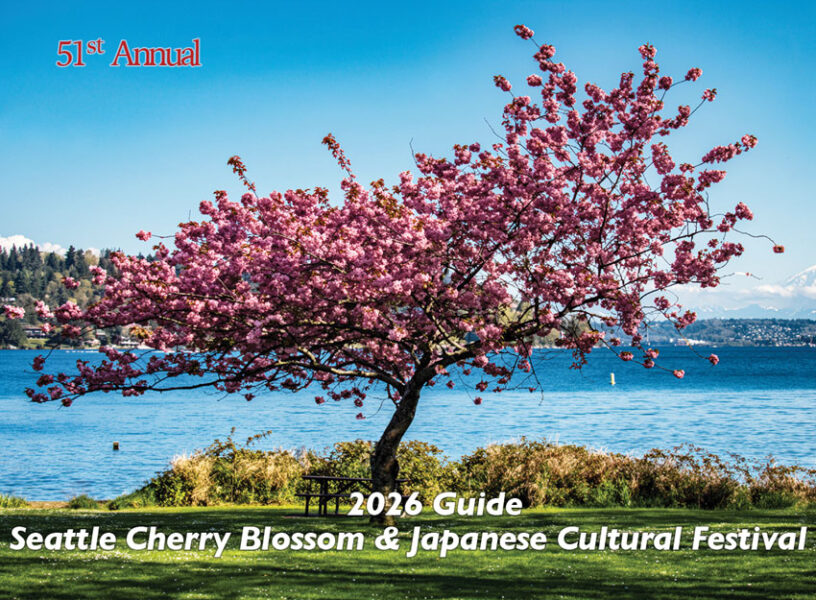
Sakura Monogatari – Stories Beneath the Blossoms
Each spring, the blooming cherry blossom trees transform Seattle into a place of color, reflection, and celebration. At this year’s festival, the theme “Sakura Monogatari”—meaning “Stories Beneath the Blossoms”—invites visitors to reflect on the moments, memories, and traditions that unfold during the short but beautiful cherry blossom season.
In Japanese culture, cherry blossoms symbolize both renewal and the fleeting nature of time. Their brief bloom reminds us to appreciate the present, whether that is sharing food with friends, watching a dance performance, discovering new art or simply standing beneath the blossoms in quiet appreciation.
Throughout the festival, each performance, exhibit, and conversation becomes part of this year’s “story.” Musicians bring rhythm to the grounds, artists share their craft, and visitors create their own memories as they explore the celebration. Under the blossoms, every moment becomes part of the story.
How the Cherry Blossom Festival Began
Did you know the first Japanese cherry blossom trees sent to the United States passed through Seattle on their journey? In Japan, cherry blossoms symbolize the transience of life. In 1909, these blossoms crossed the Pacific as a gift of friendship between Japan and the United States.
- 1885 – While visiting Japan, American writer and photographer Eliza Ruhamah Scidmore is captivated by tthe beauty of cherry blossoms. Inspired, she proposes planting Japanese cherry blossom trees along the Potomac waterfront in Washington, D.C. For 24 years, her vision goes unheard.
- 1906 – Hope begins to bloom when American botanist David Fairchild of the U.S. Department of Agriculture imports 100 cherry blossom trees to test whether they can thrive in the climate around Washington, D.C. When the trees flourish, enthusiasm for Scidmore’s dream begins to grow.
- 1909 – As plans move forward, Japanese chemist Jokichi Takamine helps arrange a generous gift of 2,000 cherry blossom trees from the city of Tokyo (in Japan and) accepted by U.S.First Lady Helen Herron Taft. The trees arrive to the U.S. through Seattle but tragedy strikes. Inspectors discover the trees are diseased. To protect American agriculture, the entire shipment is burned in a great bonfire.
- 1912 – Determined to preserve this gesture of friendship, the Mayor of Tokyo sends a new gift of 3,020 healthy cherry blossom trees representing twelve varieties. They travel from Yokohama, Japan to Seattle and then onward to Washington, D.C. where they are planted along the Potomac River in the mid-Atlantic of the U.S.
- 1935 – The beauty of these blossoms inspires the first National Cherry Blossom Festival in Washington D.C., celebrating the enduring friendship between Japan and the U.S.
- 1960 – Crown Prince Akihito of Japan tours the U.S., including Seattle. He plants a Mount Fuji cherry blossom tree in the Seattle Japanese Garden, symbolizing his hope for peace between Japan and the U.S.
- 1976 – Decades later, Japan honors its connection with the Pacific Northwest by gifting 1,000 cherry blossom trees to Seattle during America’s Bicentennial. Their arrival inspired the first Seattle Cherry Blossom & Japanese Cultural Festival, first held in Seward Park. It was later moved to the Seattle Center in 1978.
Present – The Seattle Cherry Blossom & Japanese Cultural Festival is part of the Seattle Center Festál series of free cultural festivals held at the center throughout the year.