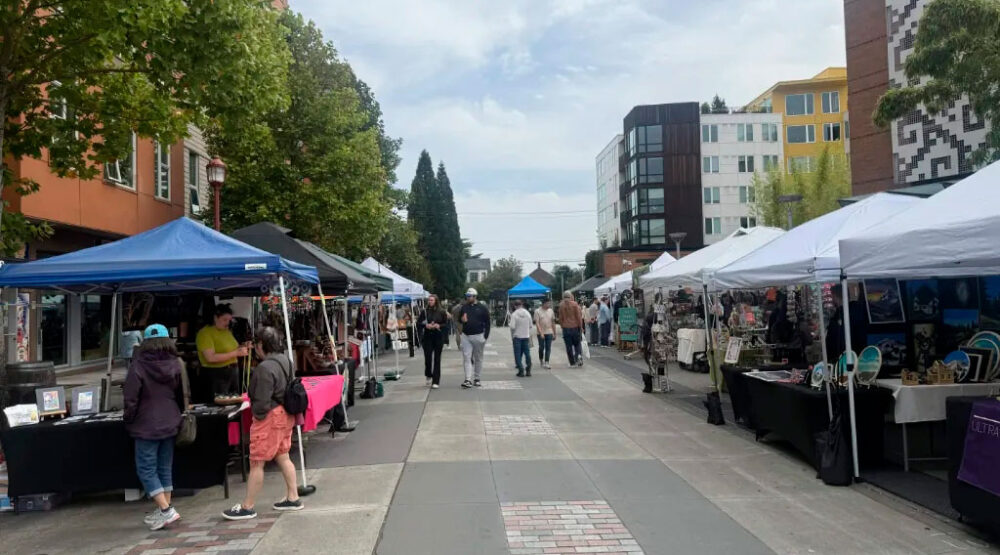
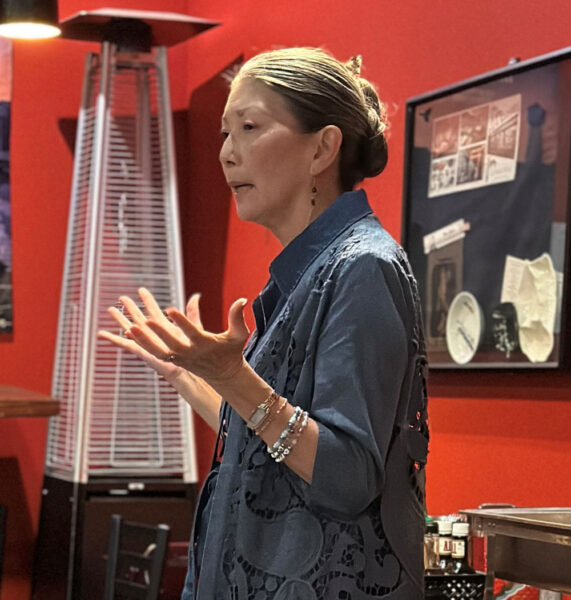
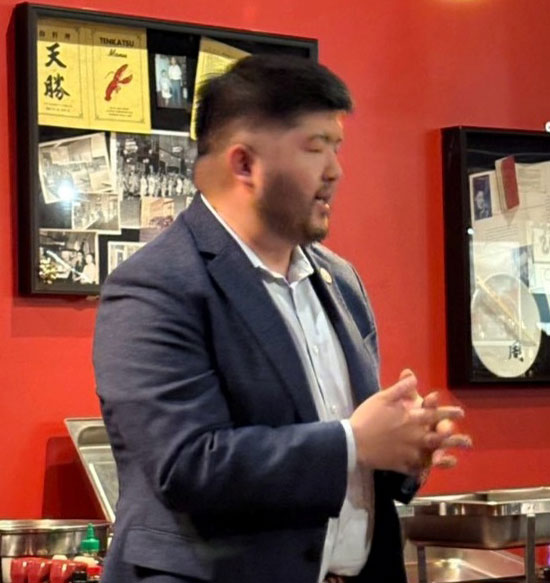
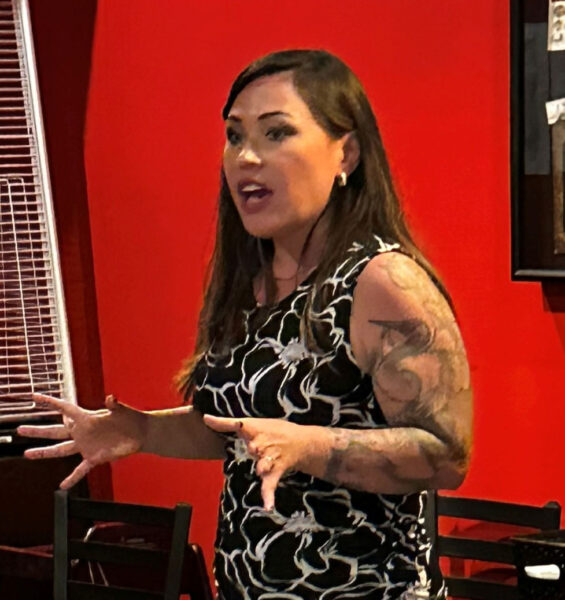
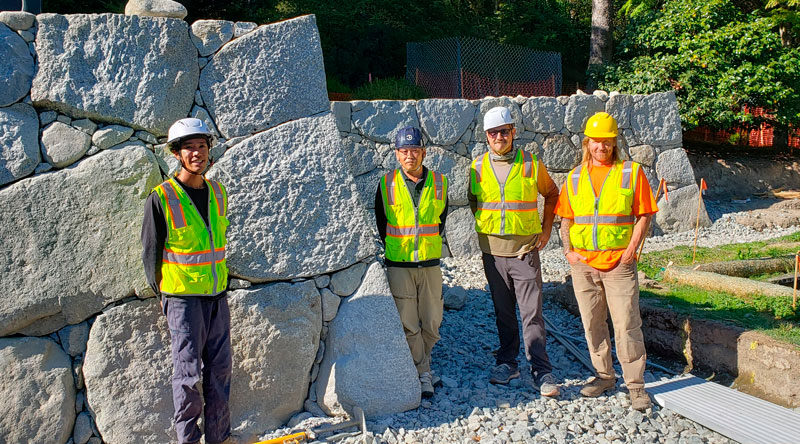
The Japan-America Society of the State of Washington (JASSW) will host its 2026 Small Business Holiday Market on Saturday, Dec. 5, at Seattle Betsuin Buddhist Temple. Shoppers can find unique gifts, handcrafted items and specialty foods from local small businesses and artists. Admission is free and open to the public.
“My Dahlia,” a work by mosaic artist Naoko Morisawa, whose art appears regularly in the North American Post, received a Merit Award in the Western-style painting category of the 73rd Akashi City Art Exhibition in Hyogo Prefecture, Japan. The piece will be on display at the Akashi Municipal Cultural Museum from Nov. 18 through Nov. 22, offering a chance to see its vivid layers of red and yellow up close.
Exhibition details Dates: Wednesday, Nov. 18 – Sunday, Nov. 22 Hours: 10 a.m. – 5 p.m. *until 3 p.m. on Nov. 22 Location: Akashi Municipal Cultural Museum, 2nd Floor Gallery
2-chome-13-1 Uenomaru, Akashi, Hyogo 673-0846 More info:www.accf.or.jp/news/bijututen (Japanese)
Olympia-based calligrapher Chiyo Sanada is exhibiting her work at YOROSHIKU Japanese Restaurant in Seattle’s Wallingford neighborhood through the end of November, where visitors can enjoy shodo alongside Japanese cuisine. Sanada, who moved to Washington 26 years ago, leads calligraphy workshops and serves as a lead presenter for the Japan-America Society of the State of Washington’s Japan in the Schools program.
▪️Exhibition details Dates: Ongoing through the end of November Location: YOROSHIKU Japanese Restaurant
1913 N 45th St, Seattle, WA 98103 Artist website:chiyosanada.com
Guest speakers Mary Abo (left) and her granddaughter, Maya Abo Dominguez.
Guests enthusiastic during the Raise the Paddle. Photo credit: Puyallup Valley JACL
On October 17, Puyallup Valley – Japanese American Citizens League hosted a fundraising luncheon with a theme of “Voices of Our Ancestors” at the Remembrance Gallery on the Washington State fairgrounds in Puyallup. Approximately 100 guests attended an afternoon filled with inspiration, storytelling, and a chance to help shape the next chapter of the gallery. During the Raise the Paddle, $68,000 was raised! Guests also visited the gallery and videotaped their own story that will be preserved.
Following a sold-out run this August, Za Trans-Pacific Productions (ZTP) brings back its stage production KAIDAN with new stories and performers, now running through October. The final performance takes place on Friday, October 30. Directed by Seattle-based director Mimi Katano, this restaged production features audience favorites from the summer alongside “Horai,” “Yuki-Onna,” “Riki-Baka,” and “Yanari.” The stories are drawn from Lafcadio Hearn’s KWAIDAN, Hyaku Monogatari (One Hundred Ghost Stories), and the kaidan series of Kido Okamoto, renowned as a master of modern Japanese ghost stories. Blending traditional Japanese storytelling with American physical theatre, the play is performed in English. Live Japanese music by Asako Tateishi of The School of TAIKO and a live sumi-e ink painting performance by Hiroko Nagatomo complete a spine-chilling evening.
*Recommended for ages 13 and up.
Article and Photo By Geraldine Shu NAP Contributor
Seattle Fukushima Club
Centered on people with ties to Fukushima, the club shares the prefecture’s history and culture, helping to pass them on to future generations. The club hosts social events that nurture connections across age groups, including a mochi-tsuki and New Year’s party scheduled for January. People from Fukushima and their families are welcome, as is anyone with an interest in the prefecture. Please email for more details.
A community for people with ties to Ishikawa and those who want to support the prefecture. Its Instagram account also shares activities such as fundraisers supporting recovery from the Noto Peninsula earthquake. The group values its ties to home while expanding awareness of Ishikawa’s culture and community in the Seattle area.
A gathering place for people connected to Shizuoka, famous for Mount Fuji and tea. Members include people born in the prefecture, those with parents, ancestors or family from Shizuoka, and former residents. The club holds gatherings throughout the year to exchange news, hometown stories and ideas for future activities.
An officially recognized Fukuoka Prefecture community club connecting people with ties to Fukuoka. The organization promotes intergenerational fellowship, cultural pride while strengthening family and community ties. Events such as mochi-making and New Year’s gatherings provide a welcoming place for people from Fukuoka, their families and anyone interested in the prefecture.
A community for people from Kyoto Prefecture and those who have lived in Kyoto. The group values Kyoto’s distinctive history and traditional culture, and takes part in local events such as Japan Fair. Through a shared connection to Kyoto, members build new relationships across generations in the Seattle area.
A historic community that will celebrate its 120th anniversary in 2027. The club has connected people through cultural exchange and community service for generations. It welcomes people from Kagoshima, those with family ties to the prefecture, and anyone interested in Kagoshima or Japanese culture. Traditional and seasonal events, networking, family gatherings, volunteer activities, and community support help foster connections across generations.
A vibrant and welcoming community for people with ties to Miyazaki and anyone who loves the prefecture. In 2025, the group was officially recognized as a Miyazaki Kenjinkai, joining a network of 36 Miyazaki associations across Japan and around the world. Through local events and shared meals, members celebrate Miyazaki’s cuisine, natural beauty, dialect, and warm hospitality while building friendships across generations and backgrounds.
Seattle Hiroshima Club Remembering Home, Supporting the Next Generation
Members and guests of the Seattle Hiroshima Club gather at the summer picnic, enjoying intergenerational fellowship. Photo credit:Seattle Hiroshima Club.
The Seattle Hiroshima Club was founded in 1901 as a mutual-aid organization at a time when Japanese immigrants were not yet fully accepted into the broader community. Before World War II, when many Japanese residents lived in Seattle’s Nihonmachi (Japantown), the club played an important role in sustaining community ties. Its activities were suspended during the war and resumed in 1947. Today, 125 years after its founding, the club has about 220 members.
At the heart of the organization is a commitment to connect across generations and backgrounds. Its annual New Year’s gathering, usually held in February or March, draws about 180 people and includes the Hiroshima Ondo (Japanese folk music). Other activities include a summer picnic, golf tournament, sake brewery tour, Mariners baseball outings, and a monthly, joint, karaoke gathering with other kenjinkais.
The spirit of mutual support that shaped the club from its earliest days remains strong. Building on postwar efforts to support Hiroshima’s recovery and donations toward the rebuilding of Kure City Hall, members have continued to assist communities affected by disasters. The club also works with the Hiroshima Prefecture on programs such as gubernatorial recognition for members age 80 and older and youth exchanges that connect generations on both sides of the Pacific Ocean.
Supporting the next generation is another longstanding priority. Since 1964, the club’s scholarship program has helped high school students with Hiroshima roots. The original $75 award rose to $1,000 in 1990, $1,500 in 2018, and $3,000 in 2021. This year, the program expanded from three recipients to five and broadened eligibility to include college and graduate students. Board member Miki Kusunose, who received a scholarship five years ago, said the support meant more than financial assistance, it helped strengthen pride in his roots and reaffirm his sense of identity.
As an organization connected to Hiroshima, the club also sees preserving the memory of the atomic bombing and promoting peace as important responsibilities. Its official YouTube channel features club-conducted interviews with hibakusha (被爆者, atomic bomb survivors) which are subtitled in English. It includes rare testimonies from Japanese Americans born in Washington State who experienced the bombing and from survivors who later immigrated to the United States.
Each August, the club serves as a co-sponsor of the floating lantern ceremony at Green Lake. It has also worked with Seattle Betsuin Buddhist Temple for more than 50 years to hold an annual memorial service.What began as a grassroots effort by volunteers has grown into an interfaith space for remembrance. It includes Jewish and Christian religious leaders joining the observance since last year. For the club, praying for peace and carrying these memories into the future are central parts of its identity.
Looking ahead, the club hopes to remain an organization people continue to need. The challenges facing Japanese immigrants and Japanese Americans a century ago are different from those of today, and the group wants to evolve with the times.“We want to create a welcoming place where everyone feels they belong—not just people like me, whose families have been involved for three or four generations, but anyone who wants to deepen the connection between Seattle and Hiroshima. We want people to feel, ‘There is a place for me here,’” Vice President Brent Kawahara said. “We welcome everyone who loves Hiroshima and values community.”
By Haruka Dunmire and Ryoko Kato The North American Post
Kenjinkai are community associations that bring together people with ties to the same prefecture in Japan. Many were founded from the late Meiji era through the Taisho era (1868-1926) and later helped reconnect Japanese Americans whose communities had been dispersed during World War II (1939-1945). Their work continues today. Membership is no longer limited to people born in a particular prefecture. Many groups also welcome former residents, family members, and anyone drawn to the region’s culture, food, or character. More than a place to share nostalgia, kenjinkai create new friendships, strengthen local community, and carry hometown traditions forward across generations.
Okinawa Kenjin Club of Washington State
Connected by the Spirit of “Ichariba Chode”
Members and guests gather at the club’s New Year’s celebration. Sanshin and eisa performances fill the event with the sounds and movement of Okinawa.
The Okinawa Kenjin Kai (OKK) was founded in 1980 and marks its 46th anniversary this year. With about 350 households and more than 800 members and family participants, it is the largest Japanese prefectural association in Washington State. Members live throughout the region from Bellingham to the Olympia area. They include people born in Okinawa, their families, second- and third-generation Japanese Americans, and anyone interested in Okinawan culture.
One phrase captures the spirit of the club: “ichariba chode,” an Okinawan expression meaning, roughly, “Once we meet, we are family.” The group welcomes people with Okinawan roots, former residents, those drawn in through music or dance, and anyone who simply loves Okinawa. President Tomoyuki Uehara says that affection for Okinawa is all it takes to be welcomed. Newcomers are naturally invited into the circle and unpretentious warmth is one of the organization’s greatest strengths.
The club’s activities are designed not simply to show Okinawan culture, but to let people experience it with all their senses. Annual events include a New Year’s gathering, summer picnic, Uchinanchu (Okinawan descendant) Day, and year-end party, with eisa (dance), Ryukyu dance, sanshin performances, and Okinawan food. The New Year’s celebration is the largest event, drawing members from far away. It ends with everyone joining in kachashi dancing with children and seniors laughing in the same circle. Through music, food, and movement, participants find themselves immersed in the atmosphere of Okinawa.
Uehara places particular importance on creating a space where people can connect comfortably. When people of different generations and backgrounds gather, opinions naturally differ. Rather than rejecting an idea immediately, he tries to receive it first as one person’s point of view. Giving people room to put their thoughts into words has encouraged more conversation and today, members of all ages feel free to offer ideas. Those small, open exchanges help sustain the club’s welcoming atmosphere.
Passing culture to the next generation is another priority. Rather than simply “teaching” young people, the club tries to create moments that make them want to know more or try something themselves. Sanshin and eisa programs lend instruments and provide opportunities to learn online from teachers in Okinawa. Performing on stage helps children build confidence and deepen friendships. In this way, the club is not only preserving culture, it is also helping people and relationships grow.
Uehara also wants to honor the organization’s history while building a kenjinkai suited to a new era. Printed notices remain important for senior members while the website, social media, and online registration make participation easier for others. For people living far from Okinawa, the club can feel like a piece of home. For second and third-generation members, it can be a way to discover their roots. And for those with no Okinawan ancestry at all, it is a place to make new friends and experience Okinawan culture. If you love Okinawa, the message is simple — you are already part of the circle.
Seattle Wakayama Kenjinkai / Seattle Kishu Club Carrying 120 Years of History into the Next Generation
Members take part in a youth exchange program in Wakayama. Another gathering, held ahead of the club’s 120th anniversary, welcomed representatives from Wakayama Prefecture. Photo credit:Seattle Wakayama Kenjinkai/Kishu Club.
The Seattle Wakayama Kenjinkai, also known as the Seattle Kishu Club, is a historic community organization that recently marked its 120th anniversary. President of the Board of Directors Dillon Brown, who took office in May, has been involved with the group for more than 15 years. He also lived in Wakayama for about four years and met his partner, Maria, there. For Brown, Wakayama is more than a place with family or cultural ties, it is where some of the most important relationships in his life began.
Former president Tazue Sasaki, who supported the organization for many years, has also been deeply involved in local Japanese cultural activities, including the Seattle Cherry Blossom & Japanese Cultural Festival. Today, a 10-member board helps lead a membership drawn from communities across the Seattle area. The club welcomes not only people from Wakayama and their families, but also former residents and anyone interested in the prefecture’s culture and landscape. The connection may be different for each person but a shared affection for Wakayama is enough to feel at home.
The word “Kishu” in the club’s English name is another name for the historic Kii Province, centered on present-day Wakayama Prefecture. Wakayama is known for its history as the home of one of three Tokugawa branch families, as well as for its ume plums. Its landscape stretching from the sea to the mountains, can feel surprisingly familiar to people in Washington State. World Heritage sites such as Koyasan (Buddhist community) and the Kumano Sanzan (shrine complex) offer a quiet, spiritual sense of place far removed from city life. Kishu ume, Yuasa soy sauce, seafood, ramen, and sake are among the region’s many other attractions. Sharing this history, culture, and food, and passing them on to future generations is an important part of the club’s mission.
In February, the club held a ceremony commemorating its 120th anniversary in Seattle. Wakayama Vice Governor Yasunori Tomoi, along with representatives of the prefectural government, prefectural assembly, and related organizations, attended. The gathering honored the generations who built the organization and reaffirmed the close relationship between Washington and Wakayama. The anniversary event at Terry’s Kitchen also featured “Wakayama Washington Women Wonders,” an exhibition highlighting women in Washington state with ties to Wakayama and the many ways they have sustained those connections through their work and cultural activities.
Regular activities include meals, summer festivals, and New Year mochi-making gatherings. The club also participates in the Wakayama Kenjinkai World Convention, held in Wakayama about every five years. The next convention is planned for 2028, offering members of Wakayama associations from around the world a chance to meet in their shared hometown. Last year, the club also sent a high school representative to Wakayama Prefecture’s first gathering for the next-generation leaders of overseas Wakayama associations, part of an effort to carry the organization’s legacy forward.
A 120-year history is never the work of one person. It is the result of generations of people choosing to stay connected. The club welcomes those with family roots in Wakayama, those who have lived there, and those who have never visited but are curious about the prefecture. Brown’s invitation is simple: “Come to Wakayama! We’d love to hear from anyone interested in Wakayama.” From Seattle to Wakayama, and from one generation to the next, each new connection becomes part of the Kishu Club’s continuing story.
Seattle Kumamoto Kenjinkai Everyone Is Welcome: Building a Community for the Next 100 Years
Seattle Kumamoto Kenjin Kai members and guests gather for the summer picnic bringing children, adults, and multiple generations together.
Founded in 1907, the Seattle Kumamoto Kenjin Kai has nearly 120 years of history and about 150 members today. Its community includes people from Kumamoto as well as members from other prefectures and anyone with an interest in Japanese culture.
A major turning point came 13 years ago, when Calvin Terada was elected president of the Board of Directors. At the time, the organization was shrinking as many longtime leaders grew older and its future was uncertain. Encouraged by the former president to choose the path he believed was best, Terada set out to build an organization that could thrive for another 100 years. Leadership became more member-driven, with an environment that made it easier for board members to share ideas. The group also opened its doors more widely: membership would no longer be defined only by birthplace but by a desire to connect with others and an appreciation for Japan.
To welcome younger families, the club has partnered with Megumi Preschool, giving children an opportunity to sing at the New Year’s gathering. It also began collaborating with other kenjinkai and with the U.S.-Japan Council, adding a cultural dimension to a network often centered on academic and business connections. New first-generation Japanese immigrant families have joined as well, helping to broaden the club’s membership across age groups.
Its three major annual events have evolved with the community. At the summer picnic, the former bring-your-own-bento format has become a potluck with activities such as ball tosses and water-balloon relays that children and adults can enjoy together. The fall bus tour has shifted from adult-oriented casino trips to family-friendly destinations and experiences including Northwest Trek, Olympic Music Festival, Manhattan Project National Historical Park, and the Japanese American Museum of Oregon. This year’s program includes a joint visit to Bainbridge Island with the Seattle Hiroshima Club. Bainbridge was the first place where families affected by Executive Order 9066 were forcibly removed during World War II. Trips like these allow multiple generations to spend time together while learning Japanese American history. It gives children, growing up in Seattle, opportunities to develop a stronger sense of Japanese American identity.
For Terada, the purpose of kenjinkai is to honor the risks earlier generations took in immigrating to the United States, and to pass the lives and relationships they built on to the future with pride. “Everyone needs a place to belong,” he said. “That is why carrying the torch to the next generation is at the heart of what we do.” A fourth-generation Japanese American with a first-generation mother, Terada also found in the club a place to strengthen his own identity through cultural activities. By working with other Japanese American organizations and continuing to change with the times, the Seattle Kumamoto Kenjin Kai hopes to remain a warm place where people can experience Japanese culture, meet others, and build community for the next 100 years.
The club is accepting donations for relief following the 2026 Kumamoto earthquake. For donation information, contact Tina Terada at tina@nwrealtyconnection.com.
World War II incarcerated survivors cutting the ribbon during the opening ceremony of the visitor center at the Bainbridge Island Japanese American memorial. Photo credit: Nancy Treder.
More than 400 people, including 13 incarceration camp survivors, gathered October 11 to dedicate the new visitor center at the Bainbridge Island Japanese American Exclusion Memorial.
The ceremony and ribbon cutting, hosted by the Bainbridge Island Japanese American Exclusion Memorial Association (BIJAEMA), marked the completion of the memorial’s final major phase. The visitor center stands at the former Eagledale ferry dock, where on March 30, 1942 Bainbridge Island’s Japanese American residents became the first in the nation forcibly removed from their homes under the U.S. Executive Order 9066 and U.S. Civilian Exclusion Order No. 1. Two hundred twenty-seven Japanese and Japanese American residents were put aboard a ferry to Seattle. It was the first leg of their journey to the Manzanar incarceration camp in California. They were later transferred to the Minidoka incarceration camp in Idaho.
The $6.5 million, 1,545-square-foot visitor center, designed by Seattle architect Johnpaul Jones, gives the memorial its first permanent indoor space for education, interpretation, and reflection. U.S. Senator Maria Cantwell, D-WA, a longtime champion of the memorial said, “We’re here today to acknowledge the significance of the very ground we stand on and its place in American history … It is a difficult and shameful chapter but that is exactly why this site is so important … It will stand as an enduring symbol of what should never happen again.” Cantwell helped pass the 2008 legislation establishing the Minidoka National Historic Site and later added the Bainbridge Island memorial. Working with U.S. Senator Patty Murray and former U.S. Representative Derek Kilmer, Cantwell helped secure $767,000 in federal funding for the visitor center.
Bainbridge Island Mayor Clarence Moriwaki, part of the founding group that shaped the memorial’s early vision, recalled accompanying the late Fumiko Hayashida to Washington, D.C. to testify before Congress in 2006 at age 95. (Her 1942 photograph with her infant daughter on the Eagledale dock became an iconic image of the exclusion.)
Hayashida told lawmakers, “I am an old woman. I hope to live long enough to see this memorial.” Moriwaki said he noticed more than one committee member wiping away tears. The vote was unanimous. In May 2008, the memorial became a satellite unit of the National Park Service’s Minidoka National Historic Site.
Debra Grindeland, a Woodward Middle School teacher, honored her uncle, the late Frank Kitamoto. His presentations on the exclusion at schools, churches, and conferences in the 1990s helped spark the grassroots effort that became the memorial. “Today, when I look at this memorial, I see the strength, courage, and happiness that Frank described in his speech,” Grindeland said. “I am grateful that Frank’s legacy lives on in this memorial.”
In closing, BIJAEMA Executive Director Ellen Sato credited the generations of volunteers, donors, and families who carried the project forward. “I’m honored to have been given the chance to help get this across the finish line,” Sato said. “But I am acutely aware that it’s been 20-something years and hundreds of people have worked on getting this built.”
The visitor center adds indoor exhibits, interpretive videos, and touch-screen stations whose content will grow over time along with flexible space for classes and seminars. Its interpretive and exhibit work was developed with representatives of BIJAEMA, Bainbridge Island Japanese American Community, Bainbridge Island History Museum, Bainbridge Island School District, and the National Park Service.
The Visitor Center will open on a limited basis with volunteer staff in the coming weeks. Public hours will be posted at bijaema.org.
About BIJAEMA: The Bainbridge Island Japanese American Exclusion Memorial Association (BIJAEMA) preserves and shares the history of the Japanese American community, honors the resilience of those who endured incarceration during World War II, celebrates the neighbors who stood by them, promotes understanding of civil liberties and constitutional rights for all Americans, and carries forward the memorial’s guiding message, Nidoto Nai Yoni — “Let It Not Happen Again.” Learn more at BIJAEMA.org.
Mak Fai Kung Fu Dragon & Lion Dance Association exhausted after their performance at the Night Market in Seattle. Photo credit: Jibran Karim.
The sounds of celebration and enjoyment filled the streets of the Chinatown International District. The local Night Market was in full swing even when the sun was high in the sky. Crowds of people from all over the area wandered the streets looking at various displays. Some offered handcrafted jewelry and trinkets while others filled the bellies of the market goers. All types of food were present from simple boba drinks to much more out-of-the-ordinary foods, like bone marrow. For East Asian food lovers, the market had a plethora of tasty meals from bao to Korean fried chicken. Some stalls even fused traditional Asian dishes with other types of cuisine. One vendor made a bold combination of a sushi taco. A crispy shell made of seaweed with various kinds of fish like tuna or mackerel stuffed inside. The blend of traditional Asian and Western cuisine showcases just how vibrant the Seattle Asian community is.
Many people from the Seattle Asian community came out with food stalls, craft stalls, and performances which was at the very center of the Night Market. Various cultures came out to share traditional numbers meaningful to their culture. Mak Fai Kung Fu Dragon and Lion Dance Association performed the opening act of the Night Market. Northwest Kung Fu & Fitness performed a traditional lion dance filled with energy and expert control. Both groups attracted large crowds of onlookers and followers as they danced through the streets of the Night Market. “I didn’t realize just how much effort goes into a lion or dragon dance,” said one of the passersby. “It feels more like something that happens in movies. Seeing it in real life is really impressive!”
Seattle Kokon Taiko drew the Night Market’s attention with a Japanese taiko drum performance.
Even though there was much excitement, there was still plenty of space for attendees to sit and enjoy a little less noise. A set of tables were set up to allow people to learn how to play Mahjong. While the tables did not have the same crowds as the food, they still had a dedicated group of players that were there from the start to the end of my visit.
The Night Market was a true joy to attend. The energy of the performances and crowds encouraged me to check out every stall. I saw why the International District is such a wonderful hub for sharing and engaging with the Asian community. I look forward to seeing what the Night Market will bring next year!
Frank S. Matsura. Matsura using multiplying camera photo.
The Nippon Kan Theatre in the Chinatown-International District in Seattle is a theatre built on history. It is a touchstone of the Japanese community that has been around since 1909. A few years ago, it underwent renovation to hold more events and to be used as a space for the Japanese community and its associates. Recently, it provided an opportunity to teach a wider audience about a specific Japanese man, Mr. Frank Matsura.
As a Japanese immigrant who came to America at the start of the 1900s, Matsura built connections with American settlers of all types who were getting their bearings in the Northwest, as well as the Native Americans of the Okanogan territory. A charismatic and joyful man, he was an excellent photographer.Matsura took pictures that captured the purest version of a person’s self as well as the beautiful landscapes around him.
The event was catered with tasty sushi, karaage, and various foods for participants. Many from the Japanese community as well as those connected with it, attended this showing.
The producer, Beth Harrington, answered questions from the audience after the presentation along with others who worked on the production and the event. “He was someone who was very brave … coming to a new land. I wanted more people to learn about him,” she explained when asked about why she worked on the film. The film was meant to honor and tell others about Frank Matsura. It took many years to shoot as many scenes were filmed in the Okanogan territory. Harrington commented that, “Just like Frank Matsura, we had to build up trust and create a relationship with the community. Our Mr. Matsura is a story about the people who were affected by him … just as much as it is about him.”
The film was excellent and will be touring around the Northwest. It has already been shown in the Okanogan territory to the people whose ancestors were directly affected by and who cared about Mr. Matsura. It has also been shown in Bellingham and Vancouver, Washington treading across the state like Matsura himself. Harrington plans to continue showing the documentary to as many people as possible. “The hope is that in a year, we can get it in some form on television … ”
While not yet on television, there will still be other opportunities to view the film. Though the life of Matsura was not simple, his demeanor, photography, and connections can offer us a chance to learn from him even now.
Washington State Rep. Sharon Tomiko Santos (left) shakes hands with Consul General Tsukasa Hirota, accompanied by his wife, Naoko Hirota. Photo credit: the Consulate-General ofJapan in Seattle.
Newly appointed Consul General of Japan in Seattle Tsukasa Hirota and his wife, Naoko Hirota, hosted a reception on October 15 at the Consul General’s Official Residence to mark their arrival in office. The evening brought together Washington State lawmakers, military, and leaders of the local community to welcome the couple and reaffirm the longstanding ties between Japan and the Pacific Northwest.
In his remarks, Hirota, who assumed office on September 14, reflected on his personal connection to the region. Growing up near Kobe in Hyogo Prefecture, Washington State’s sister state and Seattle’s first sister city, Hirota had long felt a special affinity for the Pacific Northwest.
Guests gather in the garden of the Consul General’s Official Residence during the welcome reception. Photo credit: the Consulate-General of Japan in Seattle.
He shared a particularly meaningful story about how learning of Japanese American soldiers who served in the U.S. military during World War II as a junior high school student helped shape his interest in diplomacy. He recalled how deeply their courage and history influenced him and described laying a wreath at the Nisei War Memorial Monument at Seattle’s Lake View Cemetery as his first official duty as consul general.
Hirota also highlighted the close economic, security, educational, and cultural partnerships between Japan and Washington State. Japanese companies support approximately 20,000 jobs in Washington, he noted, making Japan the state’s second-largest foreign employer after Canada. He also pointed to longstanding cooperation between Japanese suppliers and Boeing, military partnerships that contribute to Indo-Pacific security, and academic exchanges between universities.
Reflecting on his recent visit to Japan Week in Bellevue, Hirota said he was moved to see local Americans composing haiku in English, an experience that illustrated the appreciation of Japanese culture in the region.
On Oct 16, the Seattle Japanese American community welcomed Con. Gen. Hirota and his wife Naoko at the Nisei Veterans Committee hall in Seattle with Josh Ishibashi serving as the Master of Ceremony.
“When I arrived in Seattle a month ago, I didn’t feel like a stranger in a new place,” he said. “Instead, I felt as though I was being welcomed home.”
Washington State Senator Adrian Cortes of the 18th Legislative District offered welcoming remarks, finding several personal connections with the new consul general. Among them were their shared commitment to education, an appreciation for wine, and ties to Japan. Cortes noted with humor that Hirota’s qualifications as a certified sommelier particularly caught his attention as a wine enthusiast.
On behalf of his legislative colleagues, Cortes expressed enthusiasm for continued cooperation to strengthen relations between Japan and Washington State and bring prosperity to both communities.
State Rep. Sharon Tomiko Santos then led the traditional kampai toast, delivering a warm and humorous welcome. She encouraged the couple to explore the beauty of the Pacific Northwest including Eastern Washington’s wineries and the region’s autumn tradition of matsutake mushroom hunting.
Santos also reflected on historical ties including the sister-state relationship with Hyogo Prefecture established in 1963. She joked that Hirota’s birthplace made him a “native nephew of Washington State.”
Turning to a more serious message, Santos emphasized the importance of enduring personal connections between the two countries. “True security of our nations depends on a true friendship,” she said, before raising a toast to the new consul general and his wife.
Following the speeches and toast, guests enjoyed a Japanese dinner buffet and conversation. Hirota and his wife circulated among attendees, exchanging greetings and getting acquainted with members of the community as the evening continued.
Since going viral overnight with a video of their daily outfits, Aki and Koichi Kim, a Japanese American couple in their 70s, have captivated millions with their popular content mixing fashion advice and tips on living life to the fullest. In their new book Life/Style, they detail more about their lifelong passions for art and culture, family connection, and what it means to follow your dreams and understand yourself. The book, like their outfits and content, is unquestionably stylish and fun to look at. But the advice and stories are deeply meaningful and are what stayed with me long after finishing the book.
At the moment, the Kims have nearly two million followers on Instagram and TikTok, where their accounts are managed by their daughter, Yuri. The book discusses how their success is owed to the close connection as a family and Yuri’s desire to share the love for her parents with the world. Throughout each chapter, she provides perspective on how her parents’ experiences with social media and sharing their love for fashion have brought the family together in ways big and small.
When it comes to fashion, the couple moves deftly from one topic to another — prioritizing comfort over ideas about sizing, versatility, and fun while still finding distinctive pieces. The core of the book is unmistakably the idea of self-expression in an honest, authentic way. This extends naturally into the idea of fashion and style, as well as the descriptions of the Kims’ relationship after forty years: a balance between individuality and connection. I found the life advice provided in the book touching in a way that was at once universal and deeply personal. In the third chapter, the Kims talk about their relationship and how they have built a foundation of trust and friendship for the past forty years, as well as the value of real presence and patience. The fourth chapter is focused on the value of opportunity, self-confidence, and human connection.
One point that the Kims repeatedly emphasize is how in fashion and life, they try not to follow trends and instead pursue their interests in ways that feel true to them. In a section about their love for music, the couple provide a playlist with everything from Aretha Franklin to Laufey to the soundtrack from My Neighbor Totoro. Aki’s inspiration comes from pop culture and travel, while Koichi’s is from sports teams. Paired with the photoshoots including fun poses, silhouettes, and props, there is so much personality in just a few words.
The book has bright, colorful spreads and eye-catching photoshoots. It is everything from the Kims’ daily essentials for a stylish outfit to the things they have worn around the world from Kyoto to Bulgaria. Life/Style discusses self-expression and personal relationships in an exciting and vibrant way. No matter your age or background, the book is the perfect addition to any library.
Discover Japanese Products — Free Sampling Event Sat Nov 14; 1-6 p.m. (Last admission: 5:30 p.m.) Seattle Marriott Waterfront, 2100 Alaskan Way, Seattle.Discover and try Japanese products from 30 small and medium-sized businesses exploring opportunities in the U.S. market. From tea and snacks to unique household and lifestyle goods, attendees can experience products not yet widely available in the U.S. and share their feedback through surveys. The first 200 participants who complete the required surveys can enter a prize drawing where everyone wins. Prizes include gift vouchers valued at up to $50. Admission is free but advance registration is required via QR code.
Mahjong Club – Every Fri, 10 a.m.-12 p.m. Nikkei Manor, 700 Sixth Ave S, Seattle. Whether you are an experienced player or just learning, everyone is welcome. Enjoy a friendly game, meet new people, and spend a relaxing morning with tea and light refreshments. $15 per person. Questions? Contact Tomoko Faasuamalie at: 206-726-6474, TFaasuamalie@keironw.org.
Legacy Restoration Funds at Work: Minidoka National Historic Site – On June 25 Friends of Minidoka hosted the webinar. The national park staff provided an update on the restoration projects and Friends of Minidoka discussed the next steps. A recording of the webinar is now available at:www.minidoka.org/project/restoration-projects.
“All in” Opening Theme for LIAR GAME – New single release by Kroi.Kroi is a five-piece band that blends a variety of music styles including R&B / Funk / Soul / Rock / Hip-Hop. Formed in February 2018, the band made their major-label debut in June 2021. In 2025, Kroi held their first Asia tour followed by their first arena tour. Kroi has also expanded their international reach through several anime theme song collaborations. Official website: https://kroi.net.
Namsan Tower Lights – Debut album is now available. Built from a married Japanese duo’s life in Seoul, Korea. Fifteen songs move between Korean and Japanese, ten and five respectively.Layered over 1960s-70s, the Korean group has sound arrangements with 1980s trot vocals. The full album is now streaming on Spotify and YouTube Music.
Resisters of the Pacific Northwest – Online, free. Experience those who stood up against World War II incarceration and the profound violation of their civil rights that Japanese Americans experienced during the war. See: https://beyondbarbedwire.org/tours/resisters.
Georgetown Walk & Talk – Event Re-Cap: 14 volunteers/allies of Seattle’s Tsuru for Solidarity canvassed businesses in Seattle’s Georgetown neighborhood. They spoke with local workers and business owners to raise awareness about ICE deportation flights and safety violations at the King County International Airport. They also mobilized interested community to support La Resistencia’s ICE flight observation and monitoring volunteer program. La Resistencia’s petition to demand accountability from K.C. airport management is still accepting signatures at: https://actionnetwork.org/letters/demand-real-accountability-for-ice-flights-at-king-county-airport? Also, sign up to volunteer with La Resistencia at any time. See: https://actionnetwork.org/forms/volunteer-with-la-resistencia?
Weaving Time: NUNO, Textiles of Tradition and Transformation –through Feb 14, 2027. Experience the awe-inspiring artistry of NUNO, the iconic Japanese textile design studio that weaves together centuries of tradition with cutting-edge innovation.Led by renowned designer Reiko Sudō, inspiration and experimentation is at the heart of NUNO’s creativity. Featuring vibrant and compelling fabrics created across eight specific regions of Japan, NUNO’s championing of small community makers illuminates the breadth and depth of contemporary Japanese textile design. For more info, see: https://japanesegarden.org/pjg-events/weaving-time-nuno-textiles-of-tradition-and-transformation.
Fall Clearance Sale – Sat, Oct 24; 10 a.m.-4 p.m. Sun, Oct 25; 11 a.m.-4 p.m. Japanese American Museum of Oregon, 411 NW Flanders St (entrance on NW 4th Ave), Portland. Help us clear some space in preparation for our holiday omiyage store with amazing discounts! Friends of JAMO receive 20% off. Discounted clearance items for everyone! For more info, see: https://jamo.org/event/fall-clearance-sale.
OCTOBER
Sashiko Tea Towel Workshop – Sat, Oct 31; 10 a.m.-2 p.m. Japanese American Museum of Oregon, 411 NW Flanders St (entrance on NW 4th Ave), Portland. With Portland-based artist mai ide, participants will learn different classic Sashiko patterns. Explore the art of invisible repair and create your own tea towel or fukin. We’ll look at what this centuries old tradition reveals about Japanese life, consumption, resilience, and the power of repair in a throwaway world. Register at: https://jamo.org/event/sashiko-tea-towel.
NOVEMBER
Bunka No Hi – Sun, Nov 1; 11 a.m.–5 p.m. Japanese Cultural & Community Center of Washington, 1414 S Weller St, Seattle. Free family event. Everyone is welcome. Kelly Goto, will bring to life her book, “Seattle Samurai: A Cartoonist’s Perspective of the Japanese American Experience”. The event will also feature samurai-related demonstrations, activities such as an Iaido sword demonstration, and a samurai armor display. Learn the Go game, watch a tea ceremony demonstration, enjoy craft activities, and purchase some traditional Japanese food! For more info, see:www.jcccw.org/bunka-no-hi/?
Tacoma Buddhist Temple’s Fall Bazaar – Sun, Nov 1; 11 a.m.-2 p.m.Tacoma Buddhist Temple, 1717 S Fawcett Ave, Tacoma.Open to the public.Enjoy Japanese beef curry, udon noodle soup, baked goods, Asian-themed rummage sale, and fall produce. Daifuku mochi – must be pre-ordered by Sat, Oct. 24 and picked up at the bazaar 11 a.m.-3 p.m. Order online at www.tacomabt.org. For more info, see: https://www.tacomabt.org/fall-bazaar.
Japanese American Journeys & History Film Viewing & Reception – Sat, Nov 7; 3-5 p.m. Bellevue Children’s Academy, 14640 NE 24th St, Bellevue. Japan Fair presents Japanese American history and contributions with insights from educational and community research. Featured are: Stephen Sumida, Tom Ikeda, Brad Miyake, WA St. Rep. Sharon Tomiko Santos with M.C. Joy Misako St. Germain. The event includes refreshments, networking, and Q&A session. Teachers, families, and community members are welcome. Free but register at: www.japanfairus.org.
Ayame Kai Holiday Market – Sat, Nov 14; 10 a.m.-3 p.m. Tukwila Community Center, 12424 42nd Ave S, Tukwila.Shop unique gifts from local artisans and small businesses while supporting a great cause. Proceeds from the market help purchase essential wish list items for Nikkei Manor. It directly enhances the quality of life for our residents and Kokoro Kai participants.Check ayamekaimarket.org for details about sponsorship opportunities, donations, vendor inquiries, and more.
12th Annual Sound Singers Concert – Sat, Nov 14; 2:30-4:30 p.m. Doors open 2 p.m. Edmonds United Methodist Church, 828 Caspers St, Edmonds.Japanese mixed community choir.This year’s concert is “Nature 〜 Earth, Sea, and Sky”. Program includes the Ghibli medley, traditional Japanese folk songs, J-Pop, and more!! For more info, see: www.soundsingers.org.
Shichi-Go-San Prayer Ceremony for Children – Sun, Nov 15; 10 a.m. Jingoji Buddhist Temple (シアトル神護寺), 502 Redmond-Fall City Rd SE, Redmond.Prayer ceremony for healthy growth and protection from illness of children in their formative years. All ages can participate when accompanied by a guardian. After service, attendees receive Chitose-ame candy and a special amulet. Individual prayers can be requested at any time. Reservations required for prayer service by Wed, Nov 11. Individual prayers, call at least 7 days before desired date/time.Complete application form by calling: 425-222-4710. Offerings start at $50 (suggested) per family. Parishioner families start at $40. Special rental service for costume sets: girls aged 3 and 7, and boys aged 5. Limited quantity available.
Karaoke Meetups – Thu, Nov 19; 6-8 p.m.Japanese Cultural & Community Center, 1414 S Weller St, Seattle.Every third Thursday evening of the month. All kenjinkai clubs and the Nikkei community are welcomed. It’s a potluck so please bring your favorite finger food, snacks, and beverages to share. Available street parking.
Planning Meetings– “Mochitsuki (Rice Cake) Making Event & Leadership Workshop” – Thu, Nov 19; 3:30-4:30 p.m. Japanese Cultural & Community Center, 1414 S Weller St, Seattle. All kenjinkai clubs and the Nikkei community are welcomed. December 17th (final meeting before the big event.) Post-event wrap-up meeting on Thursday, February 18, 2027.For more info, contact Christina at: swadener8sea2fuk@yahoo.
DECEMBER
Timeless Wisdom of Fermentation in Japanese Cuisine – Sun, Dec 13; 12 p.m. lunch & 12:45-1:30 p.m. workshop. Japanese Cultural & Community Center, 1414 S Weller St, First Fl, Seattle.Kisaragi-kai presents its second Guest Speaker Series.Join Machie Overly of WA-LABO Kitchen and learn about koji, the heart of traditional Japanese fermentation. Taste WA-LABO’s homemade amazake, natto, and more. Conducted in Japanese. Free admission but limited to the first 30 registrants. Bring your own lunch or order a Makunouchi bento by Nu-Table for $25. Registration required by December 8. Contact: kisaragikaiwa@gmail.com.
Free Families Pilgrimage:
From Remembrance to Resistance
By Barbara Mizoguchi NAP Editor-in-Chief
Co-organizer Stan Shikuma speaking (with a microphone) and pilgrimage walkers standing behind him at the King County International Airport. Photo credit: Barbara Mizoguchi.
In the early morning of October 7, approximately 20 people gathered in Hing Hay Park in the Chinatown-International District of Seattle for a four-day pilgrimage around the Puget Sound area. They consisted of survivors of the World War II incarceration camps, descendants of the camps, and faith leaders. Immigrant rights advocates who organized the pilgrimage included Tsuru for Solidarity, La Resistencia, and Free Families: The National Coalition to End Family and Child Detention. The group gathered for a 48-mile walk to critical locations demanding an end to the lock up, family separation, and deportation, as seen across the U.S. and locally today. They are demanding a future where families and communities are together and safe.
It was just like World War II in 1942 after Japan bombed U.S. ships at their naval base in Pearl Harbor, Hawai’i. Suddenly, U.S. citizens became extremely racist, prejudiced, and discriminatory against those of Japanese descent. The hysteria led to the U.S. Executive Order 9066 that removed all people of Japanese descent living on the West Coast. Within days Japanese and Japanese Americans (J&JAs) were forced to leave their homes, farms, and businesses for incarceration camps when they did nothing wrong. Some families were even separated and did not know if they would see each other again.
Yet it is happening again, and the local news keeps us up to date on the latest incidences across the U.S. That is the point of the pilgrimage. It is an outcry against what is happening to individuals and families just like in 1942. People are being arrested in the U.S. while attempting to get to and from work. Individuals are inadvertently getting killed due to profiling. Children are separated from their parents and locked up with other children, not knowing if they will see their families again. It is even occurring locally.
The pilgrimage started at Hing Hay Park then continued walking with their signage down Sixth Avenue South toward the INScape Arts building (former U.S. Immigration and Naturalization Service building). The walk connected sites of past and present injustices. Relatives of Japanese immigrants shared their family’s experiences in the INS building. Then the group continued walking down Airport Way South. Along the way, a van was available for elderly walkers to ride in. There was also a team with walkie talkies handling logistics, security, and health.
Another team was waiting for the group’s arrival at the King County International Airport (KCIA). They brought a banner, strings of multi-colored, origami cranes, signage, and a speaker box with a microphone for a media program as the group arrived. Reverend Karen Yokota Love from Blaine Memorial United Methodist Church began with a poignant prayer. She acknowledged the courage of the walkers to speak out about how ICE (U.S. Immigration & Customs Enforcement) must be abolished, how those unjustly imprisoned are being flown from the airport not knowing where they are going, and how they all must be freed. People gathered together as a community.
Left to right: Satsuki Ina, age 82; Rev. Kenji Akahoshi, age 84; and Chizu Omori, age 96 all from California. They are participating in the pilgrimage and listening to speakers at the King County International Airport. Photo credit: Barbara Mizoguchi.
Stan Shikuma from Tsuru for Solidarity mentioned how his family from Shelton were incarcerated but no one in the community cared. No legal entity said, “No.” La Resistencia has been watching KCIA and noticed shackled individuals boarding planes three to four times per week. They do not know where they are going. It is morally unjust and constitutionally wrong. As the Bainbridge Island Japanese American Memorial Associations says, “for the sake of the children” (Nidoto Nai Yoni.)
Josefina Mora-Cheung of La Resistencia, noted that in 2024, approximately 5,000 individuals and 122 flights departed. Last year, 124 flights departed in 10 months, and this year so far, 4,283 individuals departed. John Parrott, KCIA Executive Director, is familiar with the U.S. executive order which suggests the flights but does not enforce it. However, he is allowing the flights to be enforced. Examples include: Mr. Stevenson, a Tukwila resident who was bussed to Georgia when he was trying to get married. A 29-year-old Florida man was shipped to the Tacoma detention center and has been there over a year now. The flights do not necessarily take them to their hometown but to areas where the cartels prey on them.
Satsuki Ina, co-founder of Tsuru for Solidarity, came up from California to participate in the pilgrimage. She is the author of “The Poet and the Silk Girl” book. Ina was a child when her family was incarcerated at the Tanforan Assembly Center in San Bruno, California and Tule Lake Incarceration Camp in California. Her parents protested the incarceration and answered “no” on the loyalty form which was handed out to all those in the camps. Her father often gave speeches to fight but he was then sent to Bismarck, North Dakota on allegations of sedition. Today, as Ina meets children in detention centers, they are crying from the brutality. The children remind Ina of herself during her own incarceration. She also witnessed a mother and baby in shackles being sent to south Texas. Many decades later at 82 years old, Ina knows what freedom is and has lost faith in the U.S. government. It must stop. Instead, it needs to be replaced with humanity and love.
Mike Ishii, co-founder of Tsuru forSolidarity, said this pilgrimage is about freeing families in detention centers.These walks are timely due to the upcoming U.S. mid-term elections on November 3. They will determine if the U.S. House of Representatives will be under Democratic or Republican control. That is why these pilgrimages have been occurring since June in Atlanta, Georgia; Portland, Oregon; and Crystal City, Texas.
Recently, the concern has been at the Dilley Immigration Processing Center in South Texas. Both the U.S. Democrats and Republicans agreed to close the center; however, it was re-opened in 2025 to increase border controls by the U.S. Republican president. Last month, Dilley was highlighted due to ICE arresting a five-year-old boy wearing a bunny hat and carrying a Spiderman backpack in Minneapolis, Minnesota. He and his father were sent to Dilley. The boy was separated from his father and placed in a cage with other children who had been there for months. Ten days later, a judge and the U.S. Congress were required to obtain their release. Today, there are more than 1,300 individuals at Dilley — many of them are children. The largest ICE facility is in Alexandria, Louisiana. It is not a detention center but a logistics hub which converts detentions into a deportation system. Instead of housing, there is a secret airport that transports detainees out of the U.S. This is one of five facilities with thousands deported per day.
If immigrants cannot get jobs then there is no healthcare or food for their families. American farms will not have anyone working their fields and crops will die leaving a severely reduced food supply for the country. Companies will not have service workers and will have to close businesses. As a result, the U.S. government is “shooting themselves in the foot,” says Ishii.
Chizu Omori is 96 years old. She came to Seattle from California to participate in the pilgrimage. She has been a political activist since college and said she “got with the lefties.” Omori was involved with civil rights marches and anti-war demonstrations in the 1960s and 1970s. By the 1980s, she was involved with the redress, demanding that the U.S. compensate J&JAs for their unjust government incarceration during World War II. Omori was also involved in the Hohri v. U.S. case that helped establish the Civil Liberties Act of 1988. Today, she is concerned about children being detained and separated from their families. Omori also feels more media needs to be involved. However, she is glad the Burn Order podcast hosted by Rachel Maddow has been interviewing people who were incarcerated during World War II. Also, MS NOW was at the Los Angeles Orpheum Theatre interviewing U.S. Congressman Mark Takano and the Nisei Progressives. Omori wrote for Nichi Bei News with a column reviewing books and film. She also helped her sister produce the “Rabbit in the Moon” film. Her own family was incarcerated at the Poston War Relocation Center in Arizona.
Lastly, Kristin Kumph, national coordinator for Free Families: National Coalition to End Family and Child Detention, came from Richmond, Virginia to participate in the pilgrimage. The organization is an advocacy group that has supported 10 pilgrimages so far. The Crystal City to Dilley, Texas pilgrimage was approximately 40 miles. “Deportations are costing U.S. taxpayers money so we must call for an end,” says Kumph. She, too, gave examples of the Alexandria facility. There is no due process or legal services available for the detainees. Also, there is no care or sponsorship for the families of the detainees. This causes dramatic trauma and stress for all.
The program ended by announcing individual names of those who died in the Puyallup Assembly Center. Pilgrims who stayed until the end of the media program received box lunches provided by the organizers.
After lunch, the group continued their walk to the Tukwila Community Center for the closing ceremony.
The next day, the pilgrimage began at the Tukwila Community Center with an opening ceremony. Then they walked to the ICE facility (USCIS Seattle Field Office) in Seattle. Another media program occurred with highlights describing the role of the field office, its use of digital detention, the holding of children and families, and the historical parallel of the J&JA incarceration. Kairos Center for Religion, Rights, and Social Justice also joined the group. The closing ceremony was at the White River Buddhist Temple in Auburn with other inter-faith leaders. They gathered with the pilgrimage group in solidarity and in a call to action to protect our communities. Stories of resistance during the J&JA incarceration along with ICE concentration camps were shared, interspersed with song and bon odori dancing.
On Friday, the group began at the White River Buddhist Temple with an opening ceremony. Then they walked to the Remembrance Gallery located inside the Washington State Fairgrounds in Puyallup. There was an end-of-day healing ceremony with a ritual song. Afterwards, the names from the Book of Peace were read. The book holds the names of J&JA people who were incarcerated at the Puyallup Assembly Center during World War II.
On the last day, the group began at the Remembrance Gallery with an opening ceremony followed by a walk to the Northwest Detention Center (NWDC) in Tacoma. They then participated in the Solidarity Day rally led by La Resistencia and Urban Grace Church. Participants listened to faith leaders, survivors of the World War II incarceration camps, and NWDC detainees who spoke about their experiences. La Resistencia demanded the shut down of NWDC and an end to all family detentions. Taiko drumming and song were interspersed throughout the rally.
As Ishii said, the point of these pilgrimages is to have the community join them in the declaration. Everyone learns from the public media what is happening. This is a way to actively protest detention centers, deportation flights, and families in illegal holding cells. It is history repeating itself like during WWII. These detentions cause long-lasting trauma which can have inter-generational trauma.
Across the country, groups are uniting to resist the detention and deportation which is escalating and expanding. It includes cruel tactics of coercion, babies forced to represent themselves in immigration court, and ICE detaining children on their way to school or soccer practice. This leads to life-long emotional and mental health issues. Worms and mold in food have been found at Dilley Detention Center. Families are constantly sick and have trouble sleeping. Many have thoughts of self-harm or suicide. The U.S. government is even planning on re-opening the La Salle Alexandria Airport Family and Child Detention facility in Louisiana. Chemicals in the drinking water is 575,000 times higher than the federal limit.
There is a connection between what is happening in these detention centers and what happened in the incarceration camps of Japanese and Japanese Americans. As Tsuru for Solidarity says, “Stop Repeating History.”
For more information about the organizers and how to get
involved, see:
The Japan-America Society of the State of Washington (JASSW) Small Business Resiliency Program (SBRP) will feature a presentation on basic workers’ rights by the Washington State Department of Labor & Industries (L&I) as part of its second Small Business Toolkit Series session. With winter break approaching, this is a great opportunity for teens who are starting their first part-time jobs or thinking about entering the workforce to learn about their rights in the workplace. Online participation is available. Teens, we encourage you to join us!
Date & Time: Thursday, October 22, 6:00–6:40 PM Location: Bellevue City Hall, Room 1E-112
Japan Festival was a wonderful day held at Ober Park on Vashon Island in August. It happened because so many people gave their time and generosity to it.
Thank you to our volunteers, who handled everything from setup to cleanup and kept the day running smoothly.
Thank you to our vendors and performers who gave visitors so much to see, taste, and enjoy. Thank you to the committee who put in months of planning to bring this festival together.
And thank you to our co-sponsors:Vashon Parks District and Vashon Library, and fiscal sponsors: 4Culture and ArtsFund whose support made the festival possible in the first place.
We are grateful for this community and everyone who came out to celebrate Mukai Farm & Garden at this year’s Japan Festival!
By Nicole Miko Inter*Im Community Programs Coordinator and NAP Contributor
Volunteers roasting the pig and marinating it with a mop during Inter*Im’s Annual Pig Roast in the Danny Woo Garden, Seattle. Photo credit: Jonathan Jacobson.
Inter*Im’s 51st Annual Pig Roast was an incredible success thanks to everyone who came out, volunteered, donated, cooked, set up, cleaned up, shared stories, danced, and made memories together. The pig roast is held yearly to honor the gardeners and neighbors who help with the upkeep of the Danny Woo Community Garden. Volunteers gather to prep and cook the pig. Neighbors bring large plates of food to share at the potluck.
“Chaotic good” is what describes some of the behind-the-scenes energy of the pig roast.
“Chaotic” was squeezing four people and 30 lb. bags of charcoal into an SUV on one of many Costco runs, having one of the most important parts of the pig roasting spit installed the night before the event, running up and down the garden staircase and to and from our office for tools or supplies, calling frantically and repeatedly to purchase more ice, and making space for the convening of hundreds of people.
“Good” was because of all the care and intentionality behind it. It was seeing people jump in to help wherever needed, the intergenerational mahjong breakout groups, and the connection between individuals. It was the wonderful team that I got to be a part of: Jillian, J’Ney, Haobin, and Derek. Thank you all for your leadership, logistical sense, passion, and joy that you brought to every aspect of planning and executing this whole thing!
Taken together, “chaotic good” was something special. It was keeping people up through hours of karaoke in a garden in the city; it was having unexpectedly meaningful late-night conversations with strangers; it was staring deliriously into a fire into the early hours of the morning; it was roasting s’mores under a roasting pig; and it was seeing people gathered together or their first pig roast or their 40th. It was fun, and it was nourishing. It was the humanity of the whole process.
Thank you to everyone: to those who have been helping at the pig roast for decades for your experience, skills, and reasons why; to the volunteers, food donors, senior dance groups, Inter*Im staff, and UW architecture students. Thank you to the gardeners and neighborhood residents. They are the ones who tend the soil of the garden and are why there is so much character and heart in the space. Thanks to all those who attended. Community is the reason behind this whole event and joining together like this strengthens us all.
As we say sayonara to a disappointing Seattle Mariners baseball season and contemplate a possible Major League Baseball players strike in early 2027, a poor baseball fan might wonder what to do?
The North American Post has the answer: Join our February 2027 tour to Okinawa, which will feature healthy doses of Nippon Professional Baseball Spring training games and refreshing Okinawan sunshine.
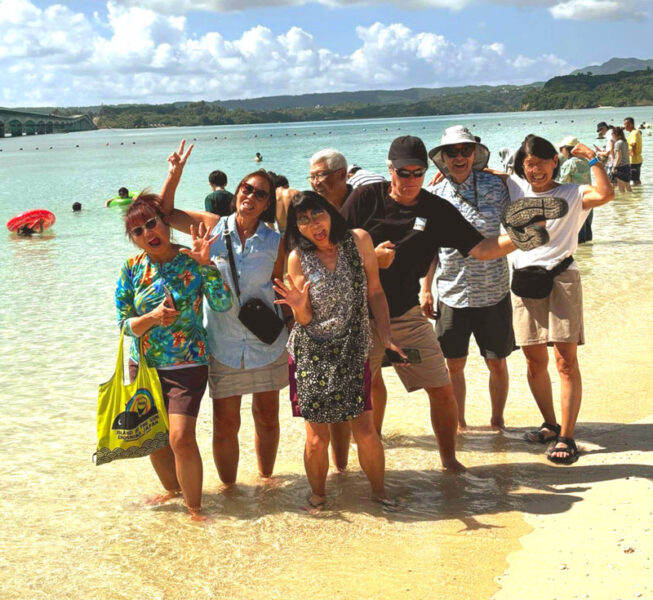
The North American Post tour enjoying some beach time together in Okinawa, Japan in fall 2025. Photo credit: Terry Watanabe.
Our readers may remember Maiya Gessling who was on the NAP staff more than 10 years ago. She has been residing in Naha, Okinawa ever since and will be one of our guides.
While Gessling is a diehard baseball fan, she is also deeply ensconced in Okinawan culture. In her day job, she helps a local artisan make and repair Okinawan musical instruments. She also plays the flute for a local musical group. Gessling can provide unique glimpses of Okinawan life that other tours cannot provide. (I will be the other tour guide.)
There are plans to go to three or four spring training games, punctuated by trips to the amazing Okinawa Churaumi Aquarium, an indigo dye workshop, a live folk music performance, a kayak tour, a coffee roasting experience, lots of local shopping, dining, and much more. Even if you are not the biggest baseball fan, this trip will give you plenty to take in.
For example, a tour of the former Japanese Navy Underground Headquarters is planned. It consists of a series of tunnels and bunkers where the navy prepared for the Battle of Okinawa in World War II. From April to June 1945, this was the site of some of the most intense fighting of the war.
On a totally different note, there will be a visit to the Okinawa Craft Industry Promotion Center, where we can watch local craftspeople at work and shop for unique local products.
Also, take a ferry to Iejima to experience one of Okinawa’s 160 islands for a day.
The trips are usually 10 days to two weeks long; this one is tentatively scheduled for February 11-23. The final schedule, complete itinerary, and pricing will be finalized in a few weeks.
The tour will be capped around 20 people to make sure it is intimate and manageable. If this sounds like something you want to be part of, please send an email to: japantour@napost.com with the subject line “Okinawa 2027.” Who knows? Maybe the next Ichiro or Shohei will be spotted and we can sell him on Seattle before those Los Angeles Dodgers scouts swoop in!
Daryl Maeda Photo credit: Glenn Asakawa/University of Colorado.
University of Washington (UW) Provost Tricia R. Serio announced that Daryl Maeda will serve as the next Katherine and John Simpson Endowed Dean of the College of Arts & Sciences. Maeda also was appointed a professor of American Ethnic Studies. He succeeds Dianne Harris who completed her service this year.
Maeda previously served as dean of the University of Colorado (CU) Boulder College of Arts and Sciences where he was also professor of Ethnic Studies. He is an interdisciplinary cultural historian and is a nationally recognized scholar in Asian American Studies and Comparative Ethnic Studies.
“Dr. Maeda brings a wealth of experience to all aspects of the role of Katherine and John Simpson Endowed Dean for the College of Arts & Sciences including a deep commitment to shared governance,” Serio said. “Throughout the selection process, Dr. Maeda repeatedly elevated the broad strengths of the College of Arts & Sciences; and the students, staff, and faculty who define them as foundational to leading the path forward through a framework of opportunity for all.”
Since joining CU Boulder as assistant professor in 2005, Maeda served as chair of the Department of Ethnic Studies, associate dean for Student Success in the College of Arts and Sciences, and dean and vice provost of Undergraduate Education. Maeda served as interim dean of the College of Arts and Sciences since June 2024 until he was appointed dean earlier this year. He is returning to the UW where he was an acting assistant professor in the Department of History from 2001 to 2002.
“I am deeply honored to serve the College of Arts & Sciences and grateful for the opportunity to partner with its exceptional faculty, students, and staff,” Maeda said. “Together, we will build on the college’s distinguished tradition of discovery, creativity, and public impact while advancing an inclusive and inspiring vision for the future.”
The College of Arts and Sciences at CU Boulder has 1,300 faculty and 400 staff. The college also has approximately 15,000 undergraduates in 49 majors and more than 2,000 graduate students in 36 doctoral programs and 35 master’s programs. As the former dean, Maeda managed an annual budget of more than $250 million and led a collaborative process that created the college’s budget allocation model. Under his leadership, the college established new records for first-year retention and six-year graduation rates and set a record for highest annual fundraising in the college’s history.
Maeda has published two books, numerous articles, and book chapters on Asian American activism in the 1960s and 1970s. His most recent book (published 2022) is a cultural history of the iconic martial artist, actor, and former UW student, Bruce Lee.
Maeda earned his doctoral and master’s degrees in American Culture from the University of Michigan. He also holds a master’s in Ethnic Studies from San Francisco State University and a bachelor’s in mathematics from Harvey Mudd College.
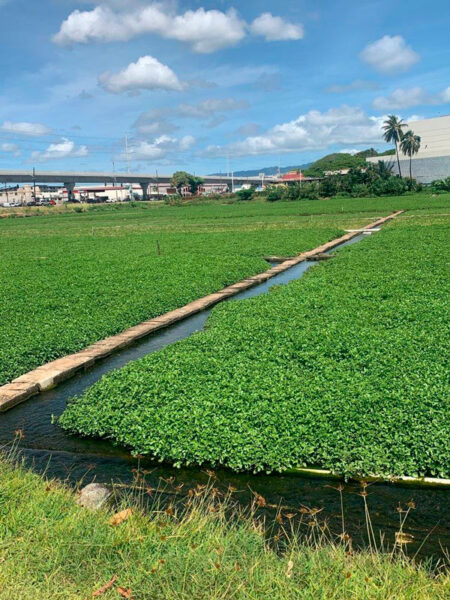
The iconic Sumida Farm grass shack that can be seen when driving down Kamehameha Highway in Aiea, Hawai’i. Photo credit: Jessica Yamamoto.
Sansei: Reestablishing Community Connection
Masaru and Norma had four children: Charlotte, Stephen, David, and Barbara. As the eldest son, Stephen once thought he would take over the family farm but his career in education took him in a different direction. The youngest two, David and Barbara, stepped up to manage and operate the farm as its third generation of caretakers in the early 1980s.
Trained by her mother, Barbara became the farm’s president and general manager while David served as operations manager. David discovered a passion for welcoming Hawai‘i’s students to the farm. EmiSuzuki shares, “Uncle Dave loved doing school field trips and tours. He realized and truly believed that the keiki (children) of Hawai‘i are the future and pivoted the farm to focus on educating them about the land through school tours.”
Yonsei: Carrying the Farm’s Legacy Forward
Born and raised in Pullman, Washington, Emi is the daughter of Stephen Sumida and Gail Nomura. Though raised outside of Hawai‘i, she spent much of her life traveling back and forth to visit during school breaks.
In 2018, Emi and her husband, Kyle Suzuki, officially stepped forward to become the fourth generation of caretakers of the farm. Emi recalls having a “lightbulb” moment while reading an airline magazine article about Hawai‘i farms. She realized that she and Kyle did not need to start a new business from scratch — the Sumida family’s multi-generational farm already reflected the values they cherished. They wanted to build a life and business grounded in kindness, integrity, and care for the ‘āina (love of the land) and community.
The values instilled in Emi by her father are ones she hopes to pass on to her own children. In a blog post about her father, she wrote: “As I grew older, and especially once I decided to take over management of Sumida Farm, the stories evolved into more serious history lessons and conversations. He wanted to ensure I understood the deep and long history of not just our farm but of the ‘āina. He was the first to tell me, ‘Our family’s farm story is just a blip in the long history of the ‘āina, we must respect that history.’ Kyle and I have truly come to understand this sentiment, and it has become central to how we educate partners, customers, and students who visit Sumida Farm.”
By 2020, Emi and Kyle were learning all they could from Barbara and David to prepare for the transition. But when Barbara suddenly became ill and passed away in February 2020 — just as the COVID-19 pandemic began — the couple’s nine-year transition plan quickly became a two-year one.
Reflecting on the experience, Emi describes it as “unexpected.” She shares, “There are days when it’s challenging and hard, but I wouldn’t change it. I never thought I would be in this position … I’m really fortunate that not only do I love it but I also have Kyle — my husband, business partner, and coworker.”
The pandemic, she says, was a blessing in disguise. It gave their family time to work side by side on the farm while their children — Clare, Alice, and Margaret — attended school virtually from Hawai‘i (to Seattle). “This is one of the most fulfilling things I’ve ever done,” Emi reflects. “Nothing I do for corporate America will ever touch the impact we get to make through carrying on the legacy of the farm.”
Since stepping into their new roles, Emi says, “The farm embodies so many things we care about — the environment, the people, food, nourishment, education, art. There are not many jobs in this world that align so completely with your values. I love that we get to carry that on.”
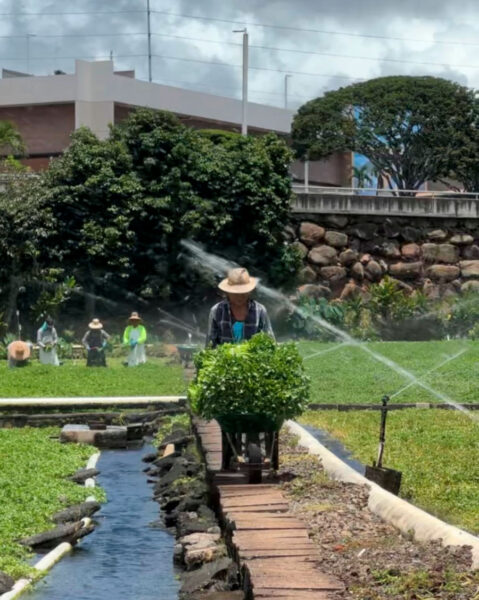
Narrow pathways between the plots allow workers to move wheelbarrows full of watercress with ease. Built by Nisei family Masaru and Norma Sumida, 1950s.Photo credit: Jessica Yamamoto.
Looking Ahead to the Next 100 Years
Reflecting on almost 100 years of history, Emi is in awe. She explains that “thinking about the sacrifices made by previous generations, it’s inspiring to see … our family was not rich — they were hardworking, working-class people who ensured that they made the right decision so that their children could build their own lives here. I think about that and the privilege we have now as Yonsei (fourth generation Japanese American). All that we have is built on the sacrifices of the previous generations and I also think about the future generations …That was really what inspired Kyle and me to step up — if no one steps up to face the challenge today then no one else will.”
She explains that “the farm is this dream that Kyle and I are chasing. My kids are just along for the ride … I hope that in the long run, they realize how unique and special this upbringing is and that they look back fondly on it.” Emi smiles as she recounts what it’s been like watching her girls experience life on the farm.
Load of watercress in a wheelbarrow being rolled down the narrow pathway along the spring water on the Sumida Farm in Aiea, Hawai’i.Photo credit: Jessica Yamamoto.
“The coolest part is when they get to share the farm with their friends —and I think they see it [the farm] with new eyes.” Emi says she thinks about the future generations and hopes that they “see as much of the beauty and unique opportunity that is here at the farm and how special it is so that they carry it on.”
The family is looking forward to celebrating the farm’s centennial anniversary in 2028. Reflecting on almost 100 years of history, legacy, and stories, Emi beams that her family is excited to continue sharing the farm with the community. “That’s the cool thing about the farm — it’s so much bigger than just my family and even the community we’re aware of … it humbles you really quickly — sometimes I’m not even aware of how much this farm means to other people!”
As for the future of the farm, the family hopes to continue sharing and honoring the farm’s stories and its legacy but with a 21st century twist. “Through social media and through all the awesome collabs with other local businesses, we’re able to expand our community outside of school tours through social media platforms.”
“Our mission is to nourish the islands … we purposefully don’t include watercress or farming in that statement because where we’re going in the world — there’s a lot outside of our control. And without that true control over the future, we have to be realistic and know that there might be a day where the springs dry up or the sun is too hot or there might be a day where our farm is covered in salt water. Because of that, our goal is to nourish the islands and there are a lot of ways we can do that especially by sharing the farm’s story. Whether that’s through education, a storefront, there are a lot of ways that we can continue what we’re doing but in a little bit of a different way. I hope that, at least through my generation, we can continue farming and build on that.”
When Emi and Kyle first began dreaming about what they envisioned managing the farm and what they wanted their legacy to look like, the couple says they had a list of dreams and goals for collaborations, partnerships, and people they wanted to meet and share the farm with. “We feel we are lucky to be able to say we’ve been able to tick off a lot of what we set out to do.”
Take a gander at Sumida Farm’s Instagram (@sumidafarm) and you will see that they have over 21,000 followers — an impressive count considering they only started posting four years ago. The farm’s virtual feed is full of colorful images and videos ranging from shared stories to recipes that they feel are important to their family and community. A fan-favorite are recipes shared by Chef Elijah, the farm’s operations assistant. In addition, the farm’s feed features personal stories and photographs from the Sumida family, and recollections and connections to famous chefs of Hawai’i such as Colin Hazama, Jeremy Shigekane, and Mark Noguchi, all of whom share their own personal favorite watercress recipes and stories of the importance the farm played in their lives. Through the years, the farm has been able to partner with local businesses like Beer Lab, Zippy’s, Nature Waikiki, Feast, Kaimuki Shokudo, and Pig and the Lady to create unique island-inspired dishes, beers, and even ice cream!
“The biggest honor and most amazing part about what I get to do is, I get to work with some of the hardest-working people in the world, the best crew and the best employees you could ever ask for. In addition to the people we work with, the people we’ve met have been amazing!”
With so much admiration and respect for their team and community, Emi says that “none of this is possible without support from the community and people who care about the farm. They don’t have to care about me or my family, just the farm because without their support we cannot continue. And that’s true not just for our small business or farm but for all small businesses and farms. The support of the community and the collective desire that we can all continue on is so important. I hope that we can continue that and keep going.”
“Eat Plenty Watercress.” Check out the farm’s Instagram and website — a treasure trove of knowledge from personal notes to ‘ono family recipes. Sumida Farm shares recipes and stories about the farm’s 100-year history at: sumidafarm.com or @sumidafarm on Instagram.
Emi and Kyle Suzuki live in Seattle, Washington and are members of Blaine Memorial United Methodist Church. Emi’s parents, Stephen Sumida and Gail Nomura, are Professors Emeritus at the University of Washington. Stephen was also awarded the Foreign Minister’s Commendation by the Japanese government for his decades of dedication to promoting academic exchange between the U.S. and Japan.
Accidental Samurai Spy is about 12-year-old Aritomo Genji, the son of Lord Genji and heir apparent. Lord Genji is preparing for a battle against another warlord, Lord Kuroda, who is allied with the Americans. Genji sends his wife and son off to a distant island, so they will be safe.
On the way, a severe storm occurs, and Aritomo’s mother, his tutor, and everyone else on the ship drowns. Aritomo and his dog, Tama (ball, 玉), manage to make it to an uninhabited island, where there is very little food and no fresh water. Tama saves his master by discovering that the leaves of an abundant plant are filled with water.
Eventually, a ship arrives. Unfortunately for Aritomo, it is crewed by vassals of Lord Kuroda. Seeing no other way off the island, Aritomo pretends he is a commoner named Musashi, and he and Tama get on board, where the crew gives them water and food.
Aritomo wants to escape but when they arrive on land, Yumi, the daughter of Lord Kuroda, falls in love with Tama. Yumi had been silent ever since her older brother, Buntaro, accidentally killed her previous dog. Now she breaks her silence and plays with Tama.
Aritomo is now stuck. Lord and Lady Kuroda do not want him to go because of what Tama has done for Yumi. Indeed, they give him privileges that not even Buntaro, Lord Kuroda’s heir apparent, has. Indeed, Aritomo overhears what Lord Kuroda’s battle plan is.
Eventually, Aritomo is faced with a decision: does he stay loyal to his clan and try to inform his father of what Lord Kuroda is planning to do? Does he stay with the Kurodas and Yumi, whom he has become very attached?
I enjoyed reading this book very much. It is filled with excitement and suspense. The characters seem very real. It is available on Amazon and Barnes & Noble. Amazon suggests this book for children 7 years old and up.
The cloudy start of the day wasnot enough to deter the participants and merchants at the Beacon Arts “Japan on Beacon Hill” Street Fair on September 12. It was a special event honoring Tazue and Yutaka Sasaki, and Japanese culture. The stalls were run both by people from Japan, as well as Americans wanting to show their appreciation for Japanese culture. While there were many stalls to look at, many flocked towards the stage where musician Miss Minami was performing live.
Booths from Japan and the U.S. selling Japanese goods during Japan on Beacon Hill event. Photo credit: Jibran Karim.
After listening to her performance, the crowd made their way to the Centilia Cultural Center, where a raffle and free activities were being held. On one side, a kite-making station was set up where children and adults alike could color their own Japanese kites, bearing the imagery of stylized, Japanese footmen (yakko-dako, 奴凧).Traditional Japanese sweets could be sampled from a booth across the room. A small area was designated for teaching and writing haiku with a competition for participants. All the materials were funded by the Japanese Cultural and Community Center’s tag sale. The cultural center also made an appearance selling authentic Japanese crafts including chests, sake cups, and plates. “We don’t usually come out to these sort of events,” Karen Yoshitomi, the executive director of the cultural center explained. “But we were invited by the Sasakis this time around and thought it’d be a great place to sell some crafts,” showing just how close-knit the Japanese community is in Seattle.
The highlight of the fair was the traditional Japanese tea ceremony performed by the Urasenke Tankokai Seattle Association in Centilia. Urasenke Seattle is a group that studies and teaches traditional Japanese tea preparation. Naomi Takemura, the sensei of the group, who was originally from Japan to teach the beauty and importance of the tradition. For the fair, she was joined by three of her students. Matsugi Naomi was born in Japan then came to the U.S. After witnessing a tea ceremony, she joined the group. Kewi Bedoyan, whose mother is Japanese, found that learning about and participating in tea ceremonies was a good way to connect to her mother’s culture. Ella Barton, the newest member with no Japanese heritage said, “participating in the ceremonies is a way to make friends, practice the language, and was one of the most respectful ways I could connect with Japanese culture!” The group showcased the ceremony while Barton narrated the significance and history of each step. The audience walked through, immersing both Japanese and Americans alike.
While the fair may not have been a massive event, it showcased just how connected and accepting the Japanese community is. Those who grew up in Japan or have Japanese heritage are happy to share a part of themselves with those wanting to learn about it. Even at a street fair like this one, the strength of the community shines through.
Beacon Arts
Beacon Arts’ mission is to build community by creating inclusive and accessible opportunities for artists and audiences in the Beacon Hill neighborhood of Seattle, Washington. It is accomplished by activating underutilized public space with relevant cultural events reflective of our diverse community. For more information, see: www.beacon-arts.org/street-fairs.
The City of Bellevue Council gave approval to name a new park at Main Street and 112th Avenue Southeast, “Isan Park.” Based on community input, the Parks & Community Services Board recommended the name, and the council unanimously agreed with that choice.
In September 2024, Sound Transit transferred the park property to the city. City staff reviewed and evaluated 258 park names proposed by the community using criteria in the council’s naming policy. The Parks & Community Services Board recommended “Isan,” meaning legacy or heritage in Japanese. It is due to its uniqueness and reflection of the Japanese American community’s heritage, history, and contributions to Bellevue.
A local, community-based organization and the city have a partnership agreementto develop acommemorative installation in thepark to honor Bellevue’s Japanese American community.
In December 2025, Isan Bellevue and the city staff finalized a concept design for the project. The proposed design features a plaza with a large-scale inlay map depicting Bellevue’s historic Japanese American farms, along with opportunities for a heritage display that could include artistic elements and a distinctive shelter structure.
The project is intended to foster education and reflection while preserving the pathways, open space, and gathering areas.
Isan Bellevue has committed to raising all funding for design and construction of the project. The project timeline depends largely on the success of the fundraising campaign, which may take up to five years.
Isan Bellevue
Honoring the history and resilience of the Bellevue Japanese American community. For more information, see: www.isanbellevue.org.
Sharon Tomiko Santos, candidate for State Representative, 37th District. Photo credit: Yoko Tsuge.
Bryan Yambe, candidate for Pierce County Council.Photo credit: Yoko Tsuge.
Toshiko Hasegawa, candidate for King County Council. Photo credit: Yoko Tsuge.
Three Japanese American candidates for state and county offices met with supporters at Terry’s Kitchen restaurant in Bellevue. Community organizers pressed home a message: none of these races can be taken for granted.
Washington State Representative Sharon Tomiko Santos, King County Council candidate Toshiko Hasegawa, and Pierce County Council member Bryan Yambe were featured at the event, along with former Mountlake Terrace Mayor Kyoko Matsumoto Wright.
John Okamoto, former Seattle City Council member who attended the event said he was struck by the turnout. “I was excited to see the energy around elevating the voices of Japanese Americans. We need to work at retaining our Japanese American elected officials, and build a pipeline to prepare and get our younger generations elected.”
The gathering gave attendees a chance to speak directly with the candidates about their platforms and discuss what organizers described as a critical moment for Japanese American representation in Washington State government.
Santos, who has represented the 37th Legislative District since 1998, made history as the first Japanese American woman to serve in a mainland state legislature. She is seeking re-election this year. Hasegawa, who currently serves as a Port of Seattle Commissioner and was the first Asian woman elected to the Port in its more than 110-year history, is running for an open seat in King County Council District 2, while Yambe is seeking re-election to Pierce County Council District 5.
Santos, the longest serving of the three candidates, put the stakes in personal terms. “I feel a deep sense of responsibility to preserve, if not further, the basic rights that our parents and grandparents secured for us through their many sacrifices … the lessons of these lived experiences our community brings to the civic arena are not fully appreciated in the Washington State Legislature, where I am one of only four Nikkei (Japanese American) elected officials. Without future Nikkei elected leaders to succeed me and the others, who will remember the stories and the contributions of Japanese Americans in protecting our democratic ideals and institutions? This is why I think it is vital to remember that representation matters: if the Nikkei community loses our representation in federal, state, and local governments, I know I will feel a tremendous sense of haji (shame, 恥) and failure,” she said.
Josh Ishibashi, one of the event organizers, said the community cannot afford to sit this cycle out. “If we don’t step up and start supporting our elected officials with action, in a few years we’ll look around and realize that there are fewer and fewer opportunities to share the story of the Japanese American experience.”
Organizers pointed to donations as one of the most effective ways for the community to help, even those who live outside the candidates’ districts.
Hasegawa picked up that thread, framing organizing itself as the missing piece. “Representation matters at every level of decision making, especially elected office. But it requires people willing to engage in government processes. There are many ways to build electoral power for the broader Asian community. But the truth is, that level of organizing simply doesn’t exist locally right now. So, we keep farming out our perspective and our priorities to others. And when we do that, our issues and our communities become negotiable. That’s unacceptable. We need to demand better, and that starts with all of us leaning in.”
Attendees were visibly energized by the evening. Several expressed a desire to do more and asked organizers for more concrete opportunities to get involved.
If you would like to support these elected officials, donations can be made to their campaigns via:
View of the new Ishigaki wall being built at the Seattle Japanese Garden. Photo credit: Barbara Mizoguchi.
This summer, the Seattle Japanese Garden (SJG) had a rare opportunity to work with the 15th generation Anōshū guild member Suminori Awata from Shiga, Japan. He was asked to lend his invaluable guidance in rebuilding the garden’s original basalt retaining wall, which was deteriorating. This vital project will also incorporate an accessible walkway allowing visitors with strollers and wheelchairs to stroll through the garden.
The garden was originally designed in 1959 by landscape architect Juki Iida and Kiyoshi Inoshita of Japan. Today, Hoshide Wanzer Architects and Berger Partnership developed a new schematic design for the entire section of the garden. Along with the new wall, it will incorporate future plans for a pavilion and surrounding landscape.
The garden’s decades-old wall will be replaced with granite stones carefully selected from the greater Cascadia region of the Northwest. Awata is collaborating with Green Man Builders, a Californian stone masonry company that has worked with him on several projects, including Kubota Garden and the Portland Japanese Garden. Over the years, they have developed similar craftsmanship, trust, and artistry.
Some of the Green Man Builders helping Awata-san (second from the left) build the new Ishigaki wall at the Seattle Japanese Garden. Photo credit: Barbara Mizoguchi.
Awata works in the Anōshū style, featuring stacked, dry stones without using mortar. Instead, large split boulders and small, leftover stones are used. However, this practice goes beyond just the stonework. It involves centuries of practice, orally handed down through the family lineage. As Awata says, it is listening to the stone. A distinctive sound rings out when the stone is split with various tools. Then it is placed where it is meant to be. It takes patience, skill, and understanding of the stones.
Awata’s family has built approximately 80 percent of the stone walls seen in Japan. These include castle and temple walls that are centuries old.After junior high school, Awata began training with his grandfather Makizo Awata. At age 20, he became the head of the Anōshū tradition. He is now the president/representative director of the Awata Construction Company. His career has largely focused on repairing or maintaining existing walls built by his ancestors.
Right corner of the new, front, Ishigaki wall at the Seattle Japanese Garden.Photo credit: Barbara Mizoguchi.
The roots of Anōshū stone stacking can be traced back to the sixth century in Anou (present day Sakamoto, Otsu City in Shiga prefecture.)The Anōshū stonework can still be seen at the Enryaku temple and around the Satobo district of Sakamoto. By the 16th century, daimyō Oda Nobunaga desired the Anōshū method at his new castle because it prevented walls from falling.As a result, the Anōshū method became popular with other daimyōs wanting to build castles. However, by the 19th century, castle building and Anōshū walls diminished due to a new edict by the country to demolish them, believing they represented “old Japan”. By the 20th century, Anōshū skills were revitalized due to the long-term preservation. They are even being used in modern architecture today.
“Awata’s work is not about creating something novel or noticeably different at each location. He follows the fundamental principles and methods of the Anōshū while responding to [SJG’s] pond, terrain, and each individual stone. Through that process, a stone wall that belongs naturally … [begins to] emerge,” says Avram Dalton of Dalton Landscape. Awata first looks at the stones, decides where they will be placed, then determines the type of wall to build.He can envision what the wall will look like decades and even centuries later. Awata listens, observes, and thinks.Then he visualizes the face and the vertical and horizontal sides of the wall. He said, “When I first saw the (SJG) site, I wanted to create something that would become a symbol of this garden. I selected stones that suited that vision.”He also said, “For generations, our ancestors have taught us that a stone wall is like human society. There are large people and small people. Some have gentle, rounded personalities while others are sharp and angular. Some stones have beautiful faces, while others have rough and uneven surfaces. Yet each one has its own role, and not even one is without purpose. Both a stone wall and human society are formed when many different individuals support one another.”
Awata continued with, “Dandori begins with selecting the stones. Once I have chosen stones that fit the image of the wall I have envisioned in my mind, 80 percent of the work is already complete.”He usually studies the stones for about a day or two. If it is a large stone wall, then it might take a week. He added, “The pond is a defining feature of the Seattle Japanese Garden so I carefully considered how the stone wall would appear when reflected in the water.”Even the way the stones are chosen reflects a mason’s personality.Looking at his grandfather and father’s walls, Awata sees the difference in style. But one cannot have an ego doing this kind of work. Anōshū walls are built by and for the community to take care of in the future. Awata believes, ” … first communicate the appeal of stone walls to the younger generation and nurture the people who will continue the work. I hope that projects overseas such as this one will provide an opportunity for people not only in Japan but also around the world to discover and appreciate this tradition.”
During the construction of SJG’s wall, the public was still able to visit the garden and even view the work being done. As the large stones were hung by wires, a backhoe slowly and carefully moved them to where Awata wanted them to be. Then the team removed the wires and shifted the stones into perfect position with their gloved hands. The result is two parallel walls with a stairwell in between and the accessible pathway below.
When the wall is completed, visitors will find a safer and more accessible garden experience that includes a continuous looped and ADA (Americans with Disabilities Act) pathway. The century-old black pine donated by Seattle-born Nisei (second generation Japanese American) Richard “Dick” Yamasaki will be carefully re-incorporated with the new walls. The black pine will represent the vision, labor, and sacrifices of the Nisei. He was a World War II survivor of the forced removal of Japanese and Japanese Americans. He also guided the original SJG design intent and provided instructions used by the staff today.
Awata poignantly says, “I believe the Seattle Japanese Garden is a place where people can experience Japanese culture. By seeing this stone wall, which represents one of Japan’s traditional crafts, I hope that even those who have never visited Japan will be able to experience something of Japan here.”
Seattle Japanese Garden
Seattle Japanese Garden is operated under a cooperative agreement between Seattle Parks and Recreation, and the Seattle Botanic Gardens.
Seattle Parks and Recreation
Seattle Parks and Recreation promote healthy people, thriving environment, and vibrant community. The Seattle Japanese Garden is one of four specialty gardens among a 6,200-acre park system of 400+ parks and natural areas.
Seattle Botanic Gardens
In January 2016, the Arboretum Foundation became the primary support organization to Seattle Parks and Recreation in the operations of Seattle Japanese Garden. In 2026, the Arboretum Foundation evolved its 91-year partnership with the University of Washington to become Seattle Botanic Gardens, also a nonprofit organization. Seattle Botanic Gardens will continue to support the programming, community outreach, and fundraising of the Seattle Japanese Garden.
On September 16, local hero Dolores Dasalla Sibonga passed away peacefully in the early morning.The family is deeply grateful to the wonderful staff at Merrill Gardens Renton for the compassionate and loving care that they provided as she declined. The family will plan a celebration of life in the future, probably next year. Donations in Sibonga’s memory can be made to: ACRS Food Bank and the International Examiner.
Sibonga was born in 1931 in Seattle and grew up in the Chinatown-International District. As a child, she worked at her parents’ restaurant and pool hall called the Estigoy Cafe. Sibonga went on to the University of Washington (UW) earning a bachelor’s degree in journalism in 1952.She first worked in radio and television in Spokane and Seattle, and earned an Emmy Award nomination.After a fire at the Filipino Forum newspaper company, Sibonga and her husband purchased it. They strived to print articles on the civil rights movement and urged people to take part in united minority action.
Shibonga’s husband then encouraged her to take a summer course at the UW where they were assisting ethnic minorities attending law school.Interested, Sibonga applied for law school, was accepted, and graduated in 1973. She became the first Filipina American lawyer admitted to the Washington State Bar.Sibonga initially worked as a defense attorney then as a legislative analyst for the King County Council.She moved on to work for the King County Office of Human Rights and the Washington State Human Rights Department as deputy secretary.
Sibonga’s newly published book.Photo credit: International Examiner.
By 1978, Sibonga became the first minority female to serve on the Seattle City Council as she filled the vacated seat of Phyllis Lamphere after her departure.In the next election, she instead ran for Tim Hill’s vacated seat and won.In 1979, Sibonga defeated police officer Bob Moffett.Sibonga was reelected in 1983 and 1987. During her role as a council member, she chaired four committees: Personnel and Property Management, Parks and Community Resources, Finance, and Labor.
Sibonga also introduced legislation that would provide reparations to five city employees fired during World War II in 1942 because of their Japanese ancestry. The ordinance passed in 1984, awarding $5,000 to the employees.
In 1989, Sibonga lost the election for Mayor of Seattle.Afterwards, she also lost the city council presidency.She then decided not to run for reelection in 1992 and returned to practicing law. In 1998, she was appointed to a two-year term on the Washington State Horse Racing Commission immediately followed by a five-year term on the Washington State Human Rights Commission.
In 2023, Sibonga was honored with the International Examiner Lifetime Achievement award.Seattle Mayor Katie Wilson proclaimed August 12, 2026 as “Dolores Sibonga Day” – the day of her 95th birthday.King County Executive Girmay Zahilay and the King County Council designated August 18 as “Dolores Sibonga Day.” During the King County Council meeting on September 22, they acknowledged the meeting in honor of Sibonga.
Recently, Ron Chew (Chew Communications and community leader) asked Sibonga about her longevity and mental acuity.She said she never retired.She pointed out her long tenure with the King County Board of Appeals, that “I worked all the time,” and “I’m always interacting with people.”In June of this year, Sibonga even published her new book “The Best Adobo In Town” about her life. (For information about obtaining a copy, contact:iexaminer.org.)
Sibonga was a pioneer leader who inspired all of us to become better people in our own lives.She will be truly missed.Sibonga is survived by Theresa Escobar (daughter), Randi Maya Sibonga (daughter) and son-in-law Bart Shilvock, Martin J. Sibonga (son) and daughter-in-law Deborah, and Maya Escobar, Kali Shilvock and Reed Shilvock (grandchildren).She is predeceased by Martin Sibonga, Sr. (husband for over 50 years), Frank Ray (long-time partner following Martin’s death), and Mary and Victor Estigoy (parents).



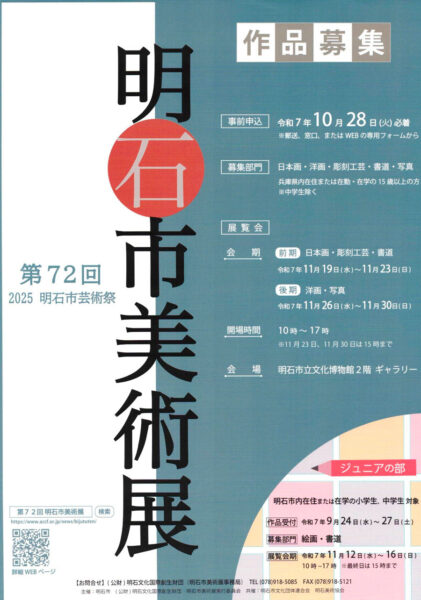
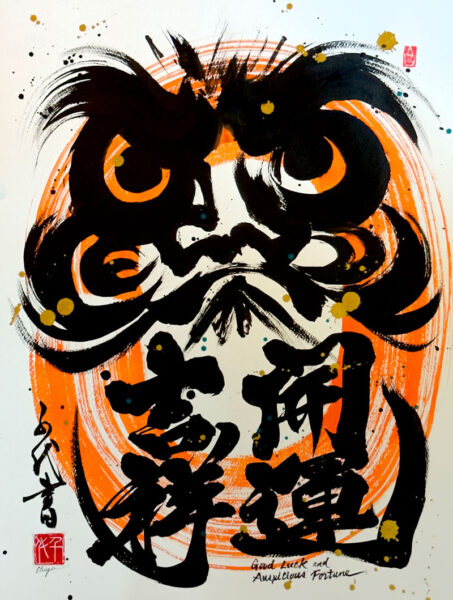
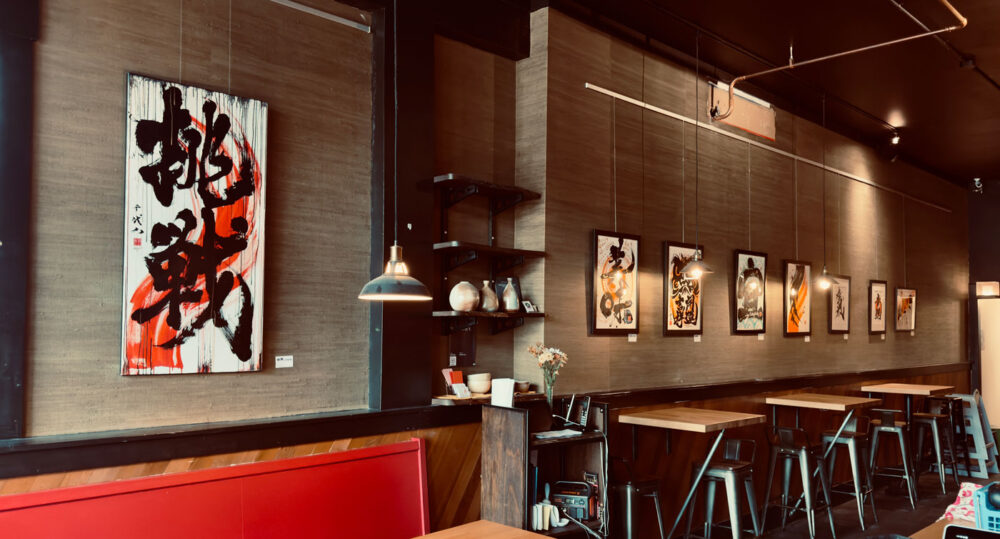


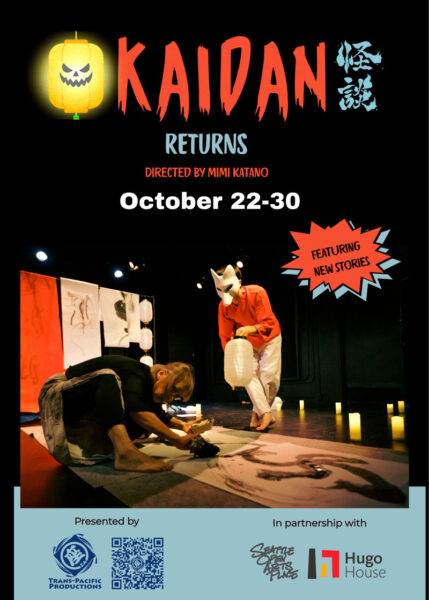

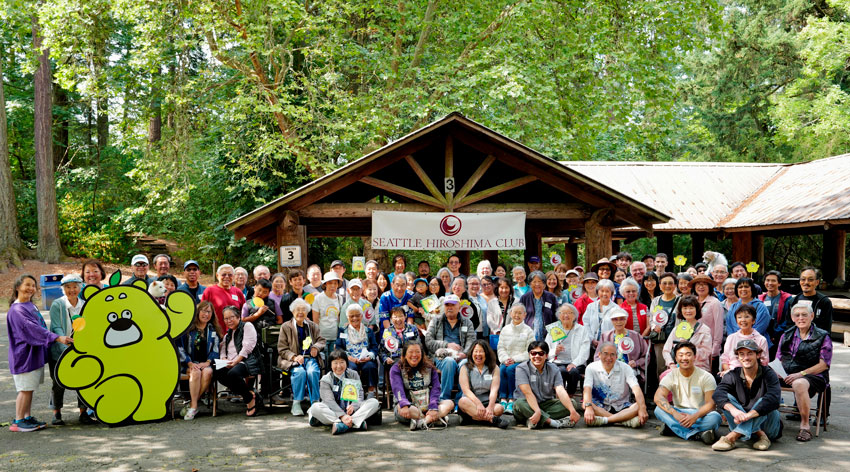

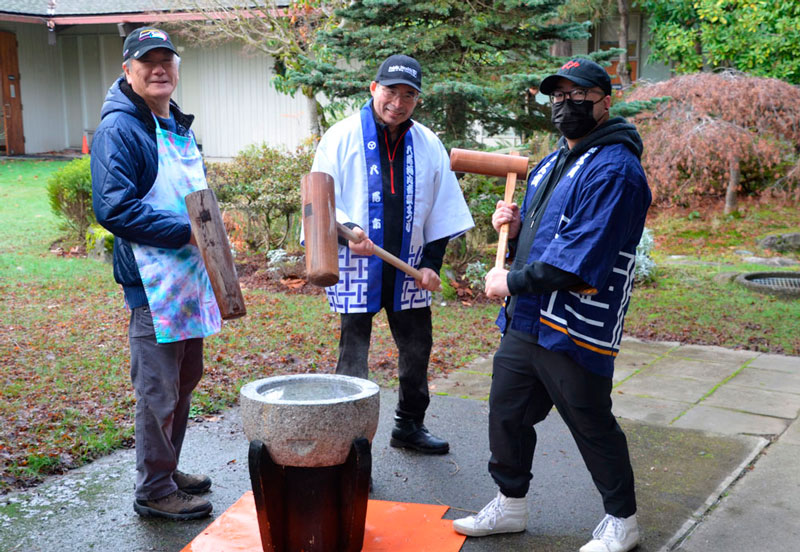
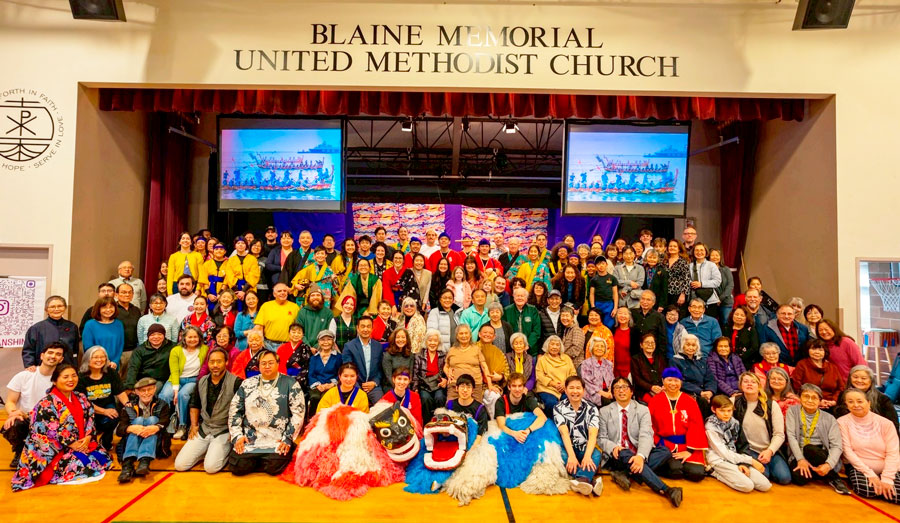
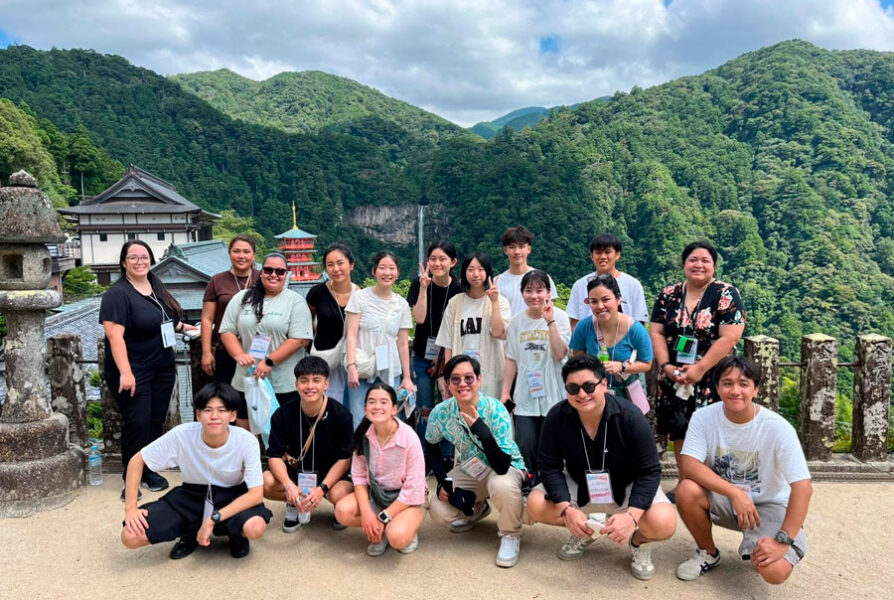

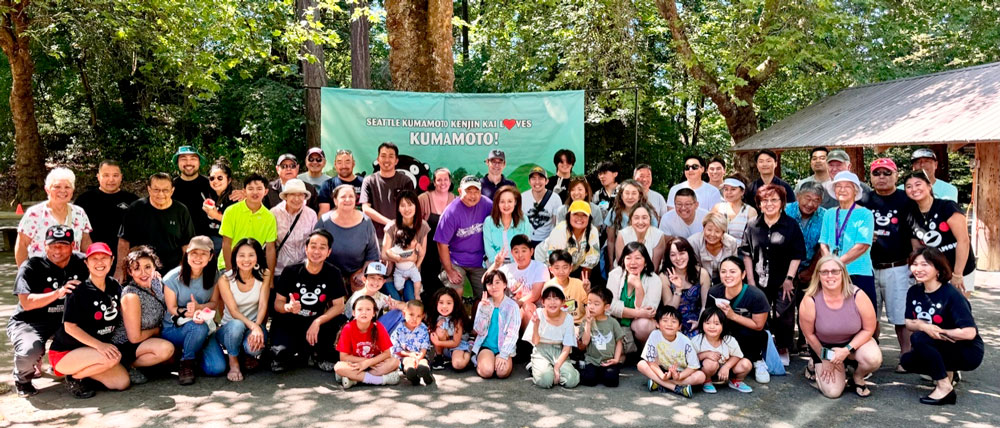
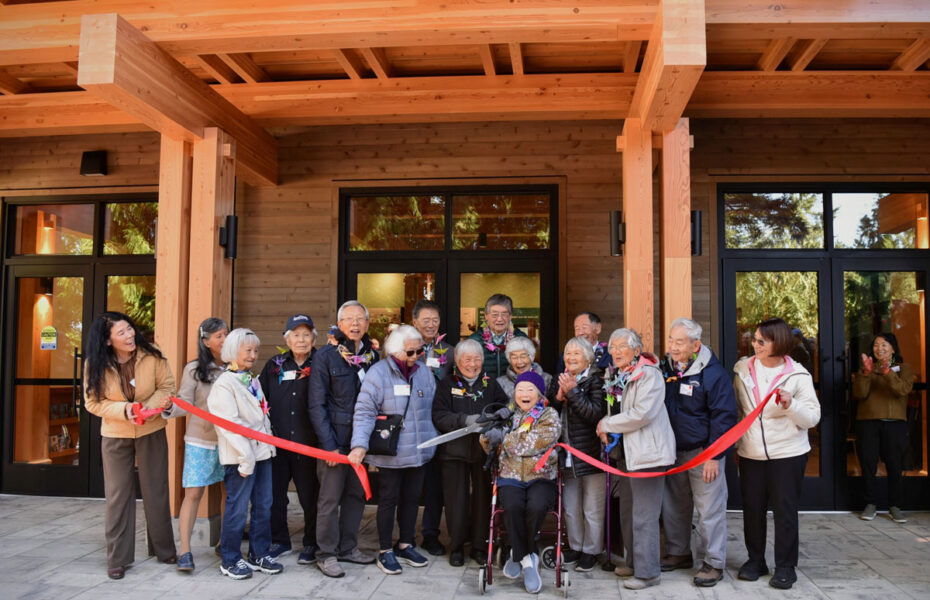
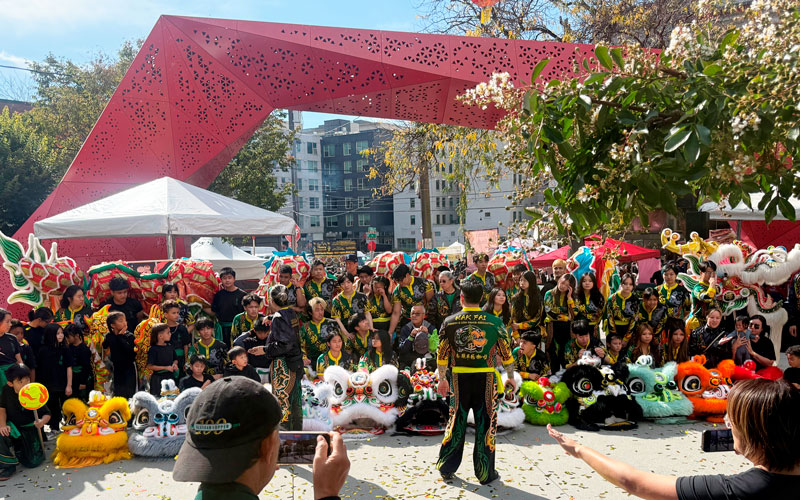


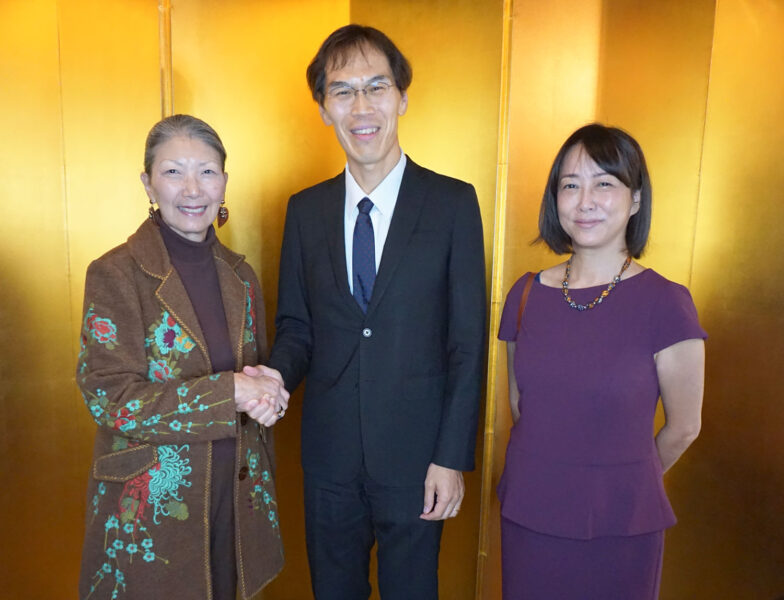
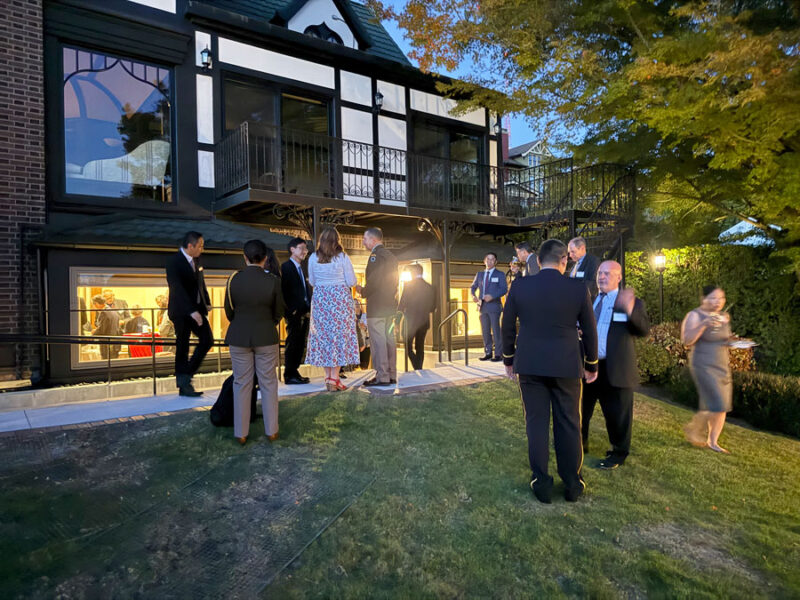
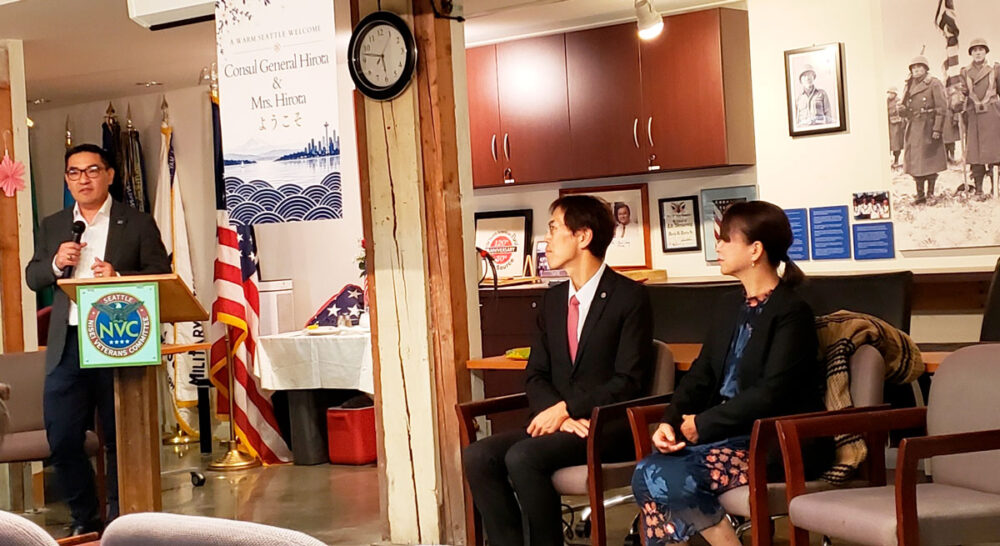



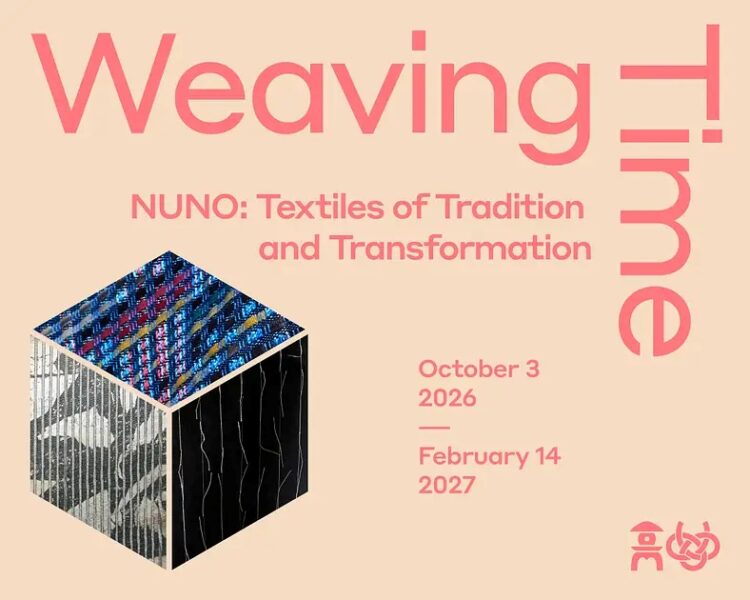
 Bunka No Hi – Sun, Nov 1; 11 a.m.–5 p.m. Japanese Cultural & Community Center of Washington, 1414 S Weller St, Seattle. Free family event. Everyone is welcome. Kelly Goto, will bring to life her book, “Seattle Samurai: A Cartoonist’s Perspective of the Japanese American Experience”. The event will also feature samurai-related demonstrations, activities such as an Iaido sword demonstration, and a samurai armor display. Learn the Go game, watch a tea ceremony demonstration, enjoy craft activities, and purchase some traditional Japanese food! For more info, see: