
By Barbara Mizoguchi
NAP Editor-in-Chief
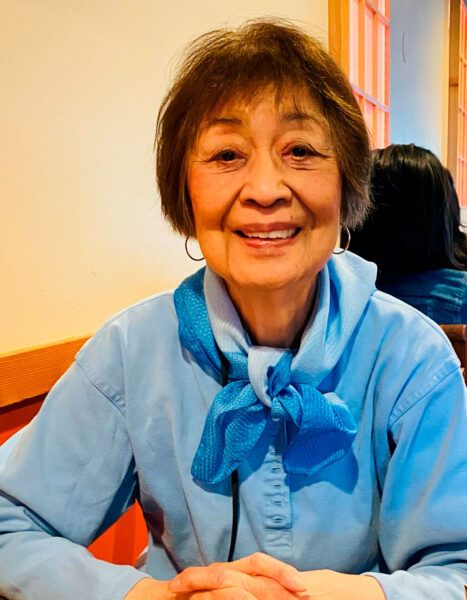
Dolores Sibonga. Photo credit: Sibonga family.
On September 16, local hero Dolores Dasalla Sibonga passed away peacefully in the early morning. The family is deeply grateful to the wonderful staff at Merrill Gardens Renton for the compassionate and loving care that they provided as she declined. The family will plan a celebration of life in the future, probably next year. Donations in Sibonga’s memory can be made to: ACRS Food Bank and the International Examiner.
Sibonga was born in 1931 in Seattle and grew up in the Chinatown-International District. As a child, she worked at her parents’ restaurant and pool hall called the Estigoy Cafe. Sibonga went on to the University of Washington (UW) earning a bachelor’s degree in journalism in 1952. She first worked in radio and television in Spokane and Seattle, and earned an Emmy Award nomination. After a fire at the Filipino Forum newspaper company, Sibonga and her husband purchased it. They strived to print articles on the civil rights movement and urged people to take part in united minority action.
Shibonga’s husband then encouraged her to take a summer course at the UW where they were assisting ethnic minorities attending law school. Interested, Sibonga applied for law school, was accepted, and graduated in 1973. She became the first Filipina American lawyer admitted to the Washington State Bar. Sibonga initially worked as a defense attorney then as a legislative analyst for the King County Council. She moved on to work for the King County Office of Human Rights and the Washington State Human Rights Department as deputy secretary.
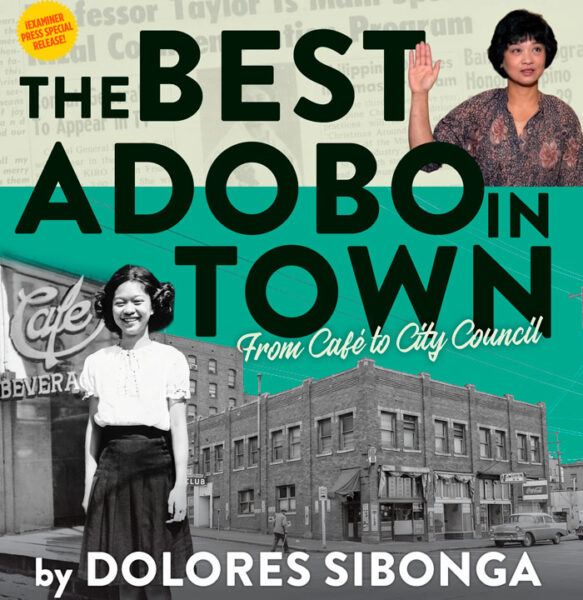
Sibonga’s newly published book. Photo credit: International Examiner.
By 1978, Sibonga became the first minority female to serve on the Seattle City Council as she filled the vacated seat of Phyllis Lamphere after her departure. In the next election, she instead ran for Tim Hill’s vacated seat and won. In 1979, Sibonga defeated police officer Bob Moffett. Sibonga was reelected in 1983 and 1987. During her role as a council member, she chaired four committees: Personnel and Property Management, Parks and Community Resources, Finance, and Labor.
Sibonga also introduced legislation that would provide reparations to five city employees fired during World War II in 1942 because of their Japanese ancestry. The ordinance passed in 1984, awarding $5,000 to the employees.
In 1989, Sibonga lost the election for Mayor of Seattle. Afterwards, she also lost the city council presidency. She then decided not to run for reelection in 1992 and returned to practicing law. In 1998, she was appointed to a two-year term on the Washington State Horse Racing Commission immediately followed by a five-year term on the Washington State Human Rights Commission.
In 2023, Sibonga was honored with the International Examiner Lifetime Achievement award. Seattle Mayor Katie Wilson proclaimed August 12, 2026 as “Dolores Sibonga Day” – the day of her 95th birthday. King County Executive Girmay Zahilay and the King County Council designated August 18 as “Dolores Sibonga Day.” During the King County Council meeting on September 22, they acknowledged the meeting in honor of Sibonga.
Recently, Ron Chew (Chew Communications and community leader) asked Sibonga about her longevity and mental acuity. She said she never retired. She pointed out her long tenure with the King County Board of Appeals, that “I worked all the time,” and “I’m always interacting with people.” In June of this year, Sibonga even published her new book “The Best Adobo In Town” about her life. (For information about obtaining a copy, contact: iexaminer.org.)
Sibonga was a pioneer leader who inspired all of us to become better people in our own lives. She will be truly missed. Sibonga is survived by Theresa Escobar (daughter), Randi Maya Sibonga (daughter) and son-in-law Bart Shilvock, Martin J. Sibonga (son) and daughter-in-law Deborah, and Maya Escobar, Kali Shilvock and Reed Shilvock (grandchildren). She is predeceased by Martin Sibonga, Sr. (husband for over 50 years), Frank Ray (long-time partner following Martin’s death), and Mary and Victor Estigoy (parents).